Tools and Tactics for campaign optimisation in 2025
BlogSEO - Content Creators
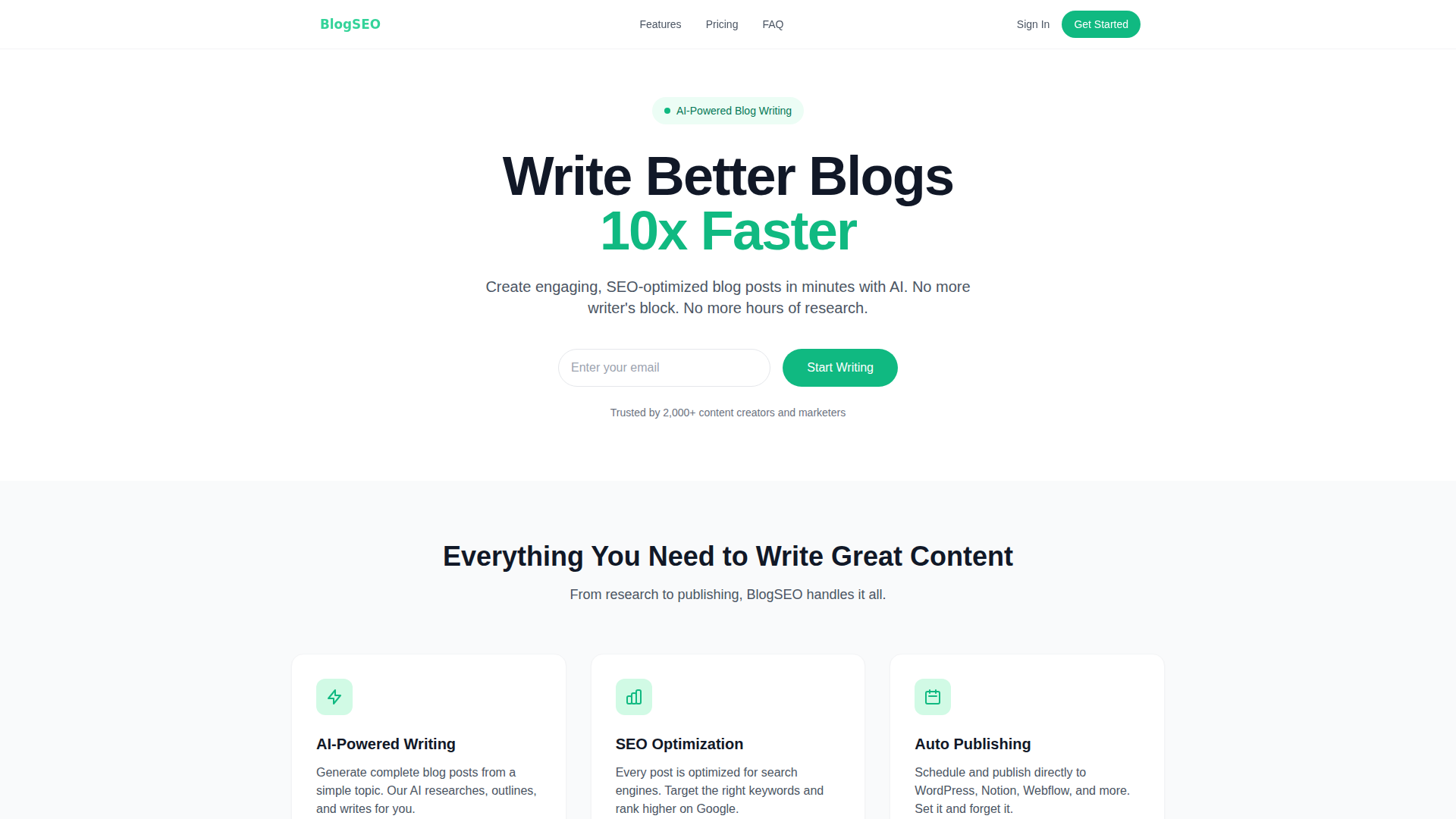
campaign optimisation often breaks down when content, SEO, and reporting live in different places. BlogSEO is built for content creators, marketers, bloggers, and small teams that want one workflow from topic research to publishing to performance tracking.
Instead of treating content as “just awareness,” BlogSEO ties each article to a goal like sign-ups, demos, or affiliate clicks. You can map content to a funnel stage, pick a target audience segment, and track what happens after the click. That makes it easier to spot which pages drive conversion rate enhancement, not just traffic.
BlogSEO also fits teams that publish a lot. It helps you keep briefs consistent, reduce rework, and build a repeatable process for A/B testing headlines and calls to action. If you’re trying to improve ROI without adding more meetings, it’s a practical place to start.
If you want a clearer view of what content is actually doing, try BlogSEO on one campaign and compare results against your current workflow.
Key Features
BlogSEO focuses on the parts of content-led growth that usually get messy.
Used well, BlogSEO becomes a simple system for data-driven decisions, especially when you publish across multiple channels and need consistent measurement.
Pricing Info
BlogSEO pricing usually makes the most sense when you map it to output and reporting needs.
Value tends to come from saved time and fewer “rewrite loops.” If your team spends hours chasing performance metrics across tools, BlogSEO can replace part of that stack. Before you commit, list the integrations you need (analytics, CMS, and reporting) and confirm they’re supported.
Pros and Cons
Pros & Cons
Jira - Agile Project Management
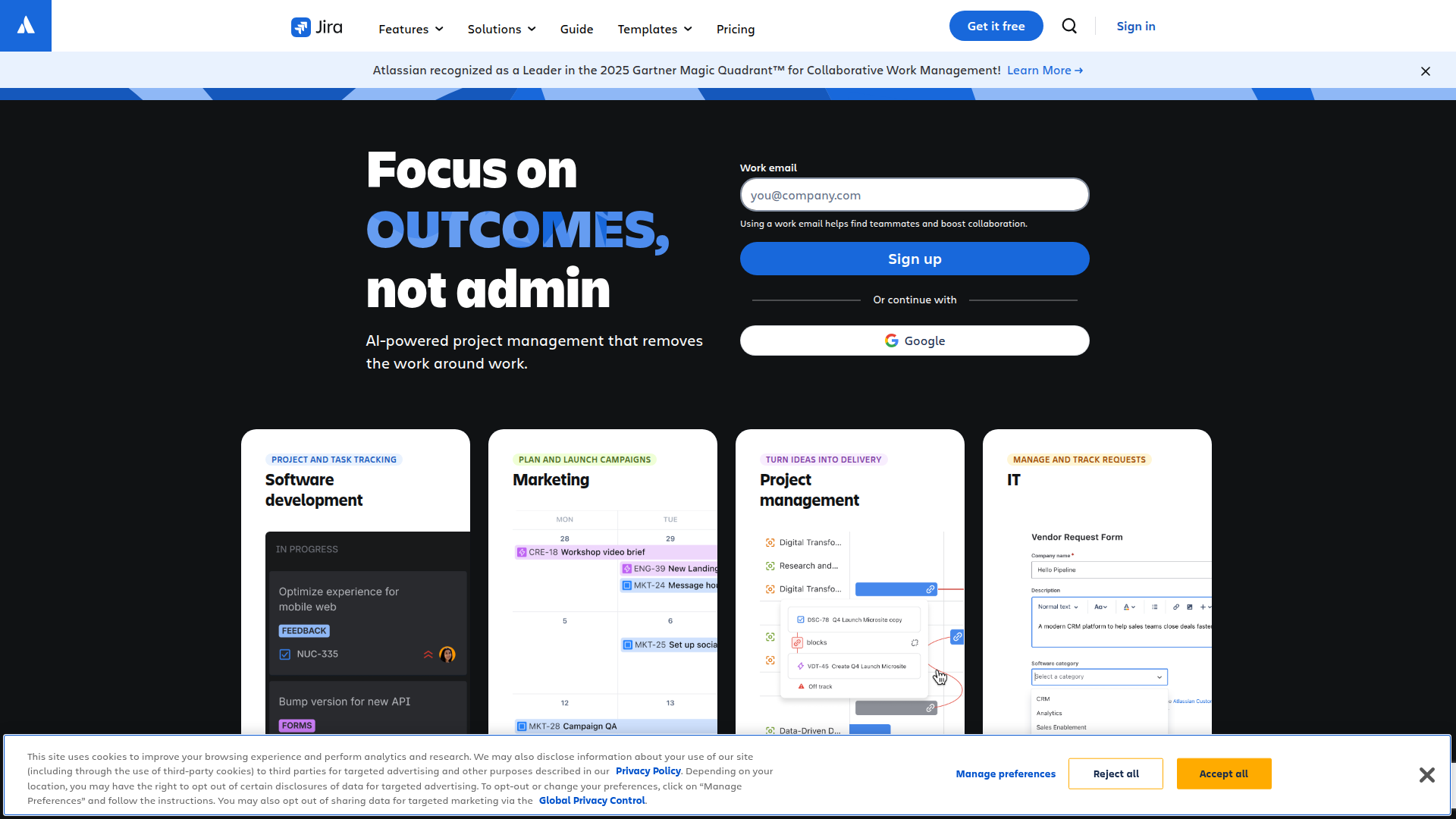
Jira isn’t a marketing tool first, but it’s useful when campaign work looks like software work. If your team runs sprints, ships landing pages weekly, or coordinates designers and developers, Jira can keep delivery predictable.
For campaign work, the win is visibility. You can see what’s blocked, what’s in review, and what’s shipping this week. That matters because delays quietly hurt campaign performance, especially in multi-channel marketing where timing is everything.
Jira also helps when you’re doing structured experiments. A/B testing needs clean documentation: hypothesis, change, dates, and results. Jira issues can hold that history, so you don’t lose learnings when people change roles.
Where it can struggle is simplicity. If your team just needs a light checklist, Jira may feel heavy. But if you’re serious about repeatable execution, it’s a strong backbone for planning and tracking.
Key Features
Jira’s strengths show up when you treat campaigns like a pipeline.
If your campaign optimisation depends on shipping improvements fast, Jira helps you find where work gets stuck.
Pricing Info
Jira is typically priced per user, with tiers that scale by features.
For marketing teams, cost usually comes down to how many collaborators need access. If only the ops lead lives in Jira, you can keep seats low and still get value through dashboards and workflow control.
Pros and Cons
Pros & Cons
Confluence - Collaboration Platform

Confluence is where campaign knowledge can live without turning into a messy folder of docs. It’s useful when you need one source of truth for messaging, offers, brand rules, and experiment results.
A practical setup is a campaign hub page that links to everything: audience notes, creative specs, UTM rules, landing page copy, and weekly performance metrics. When you do that, you reduce “which version is correct?” questions.
Confluence also helps build a culture of continuous improvement. After each launch, you can run a short retro and publish learnings. Over time, that becomes a playbook for digital marketing strategies that work for your market.
AI features in modern collaboration tools can help summarize long pages, draft outlines, and answer questions from your internal docs. That’s handy when new teammates join mid-campaign.
If your team already uses Jira, the pairing is natural: Jira tracks work, Confluence holds the why, the what, and the results.
Trello - Visual Task Management
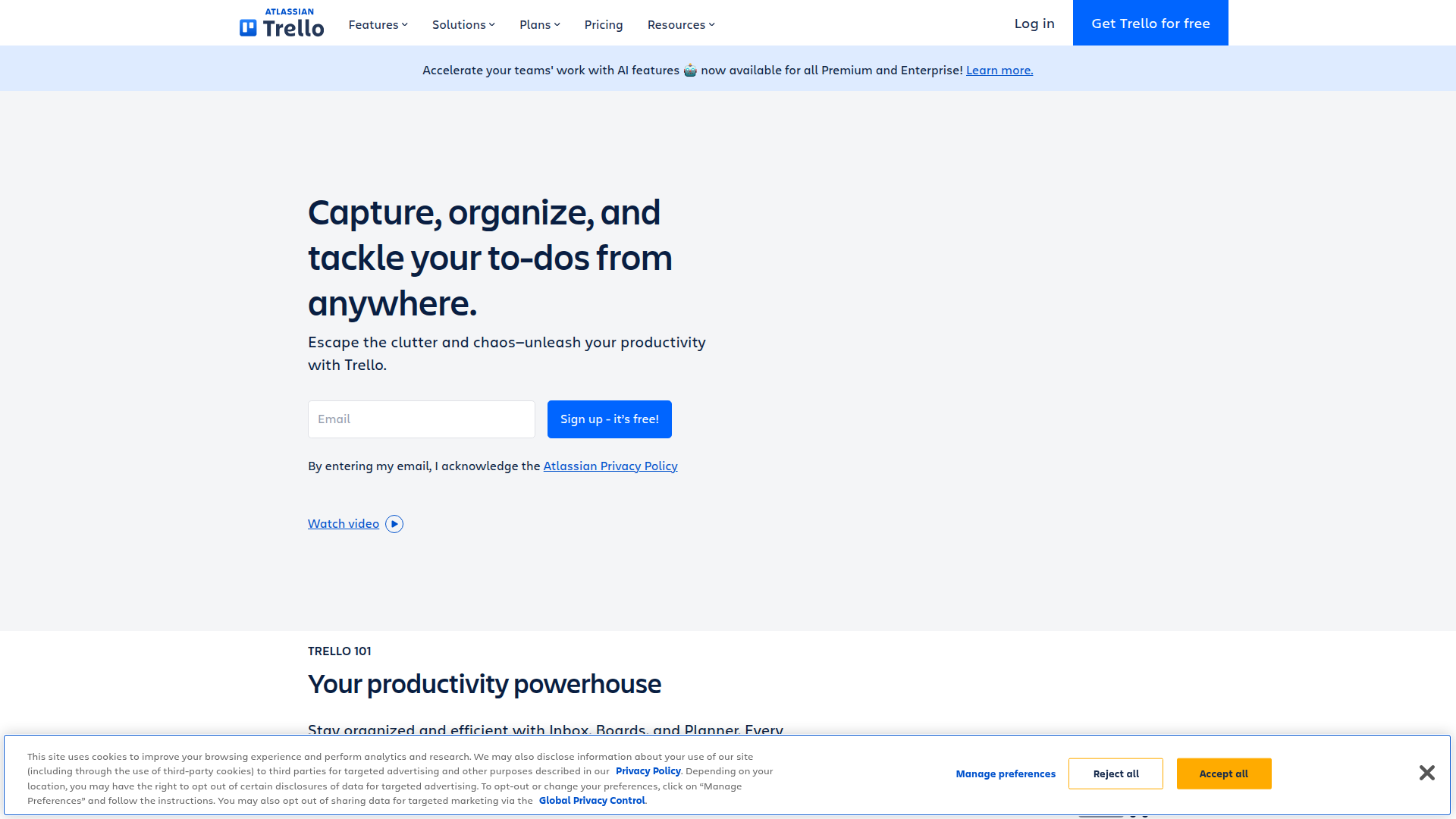
Trello is a simple way to see work at a glance. For many teams, that’s enough. Boards, lists, and cards work well for content calendars, launch checklists, and lightweight approval flows.
For marketing, Trello shines when you need clarity without ceremony. You can create a board per channel (email, paid social, SEO) or per campaign. Add checklists for tracking setup, creative sizes, and QA steps. That alone prevents common mistakes like missing UTMs or forgetting conversion tracking.
Trello can also support basic experimentation. Create a list for “Ideas,” one for “Testing,” and one for “Winners.” Attach results like cost per acquisition, click-through rate, and notes about the target audience segment.
The trade-off is depth. Trello isn’t built for complex dependencies or heavy reporting. If you need strict governance, you may outgrow it. Still, for small teams doing steady campaign optimisation work, it keeps momentum high.
Bitbucket - Git Repository Management
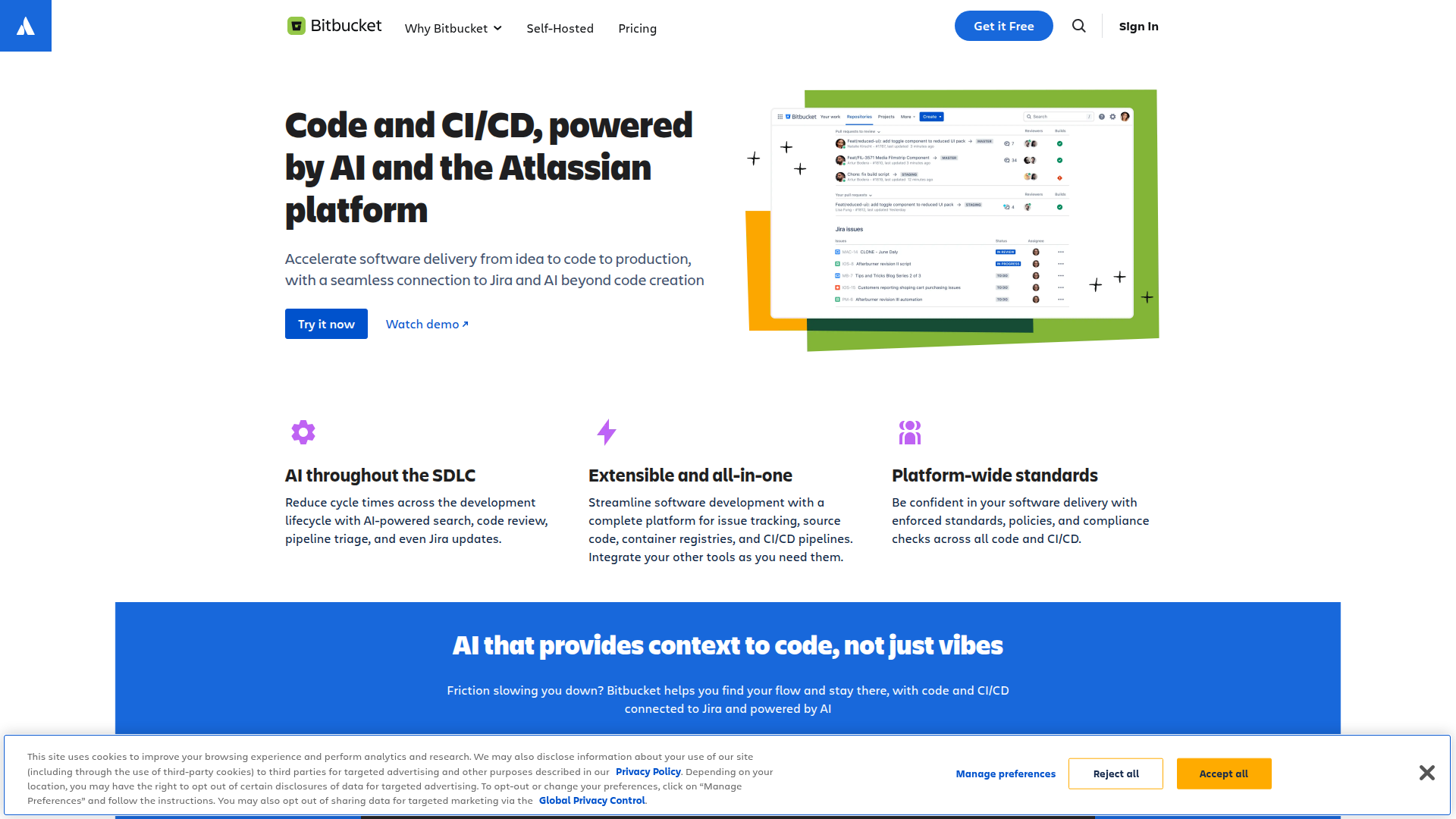
Bitbucket matters when your campaigns depend on code. Think landing pages, tracking scripts, personalization, or anything tied to a product release. If you’re running experiments that change site behavior, version control is your safety net.
A clean Git workflow reduces risk. You can review changes before they go live, roll back quickly, and keep a record of what shipped and when. That’s useful when performance shifts and you need to answer, “Did a code change affect conversions?”
Bitbucket also supports collaboration between marketing and engineering. Pull requests, code reviews, and branch permissions help teams move fast without breaking things. When paired with CI/CD, you can ship small changes often, which is ideal for conversion rate enhancement.
This isn’t a tool for everyone. If your campaigns live entirely inside ad platforms and email tools, you may never touch it. But for product-led teams, it’s part of reliable measurement and controlled change.
Loom - Video Communication Tool

Loom is a small tool that solves a big problem: too many meetings. When you’re iterating on creative, landing pages, or analytics setups, short videos can replace long calls.
For campaign work, Loom is great for async reviews. Record a 3-minute walkthrough of a new landing page, explain the hypothesis, and point out what changed. Designers and stakeholders can comment with timestamps. That speeds up approvals and reduces back-and-forth.
It also helps with training and process. Record how to tag campaigns, how to read dashboards, or how to QA tracking. That supports a culture of optimisation because people can learn the “right way” quickly.
Loom won’t improve performance metrics by itself, but it removes friction. Faster feedback loops mean you can run more tests, fix issues sooner, and keep multi-channel marketing aligned.
Final Verdict

Good campaign optimisation is less about one magic trick and more about tight feedback loops. You set a goal, measure it, learn, and make the next change. Tools only help if they support that loop.
If content is a core channel, BlogSEO gives you a practical way to connect articles to outcomes and track what matters. Jira and Confluence fit teams that need structure, documentation, and repeatable delivery. Trello is a lighter option when you want visibility fast. Bitbucket is essential when code changes affect results. Loom keeps reviews moving without adding meetings.
For 2025, expect more AI support in research, creative drafts, and reporting summaries. The teams that win will still do the basics well: clean tracking, clear KPIs for campaigns, and honest post-launch reviews.
Pick one area to improve this month. Maybe it’s better customer segmentation, tighter A/B testing, or cleaner marketing analytics. Small, steady changes add up, and that’s the real point of campaign optimisation.