Top White Label SEO Tool Options for Agencies 2026
WhitelabelSEOTool: Essential for SEO Agencies
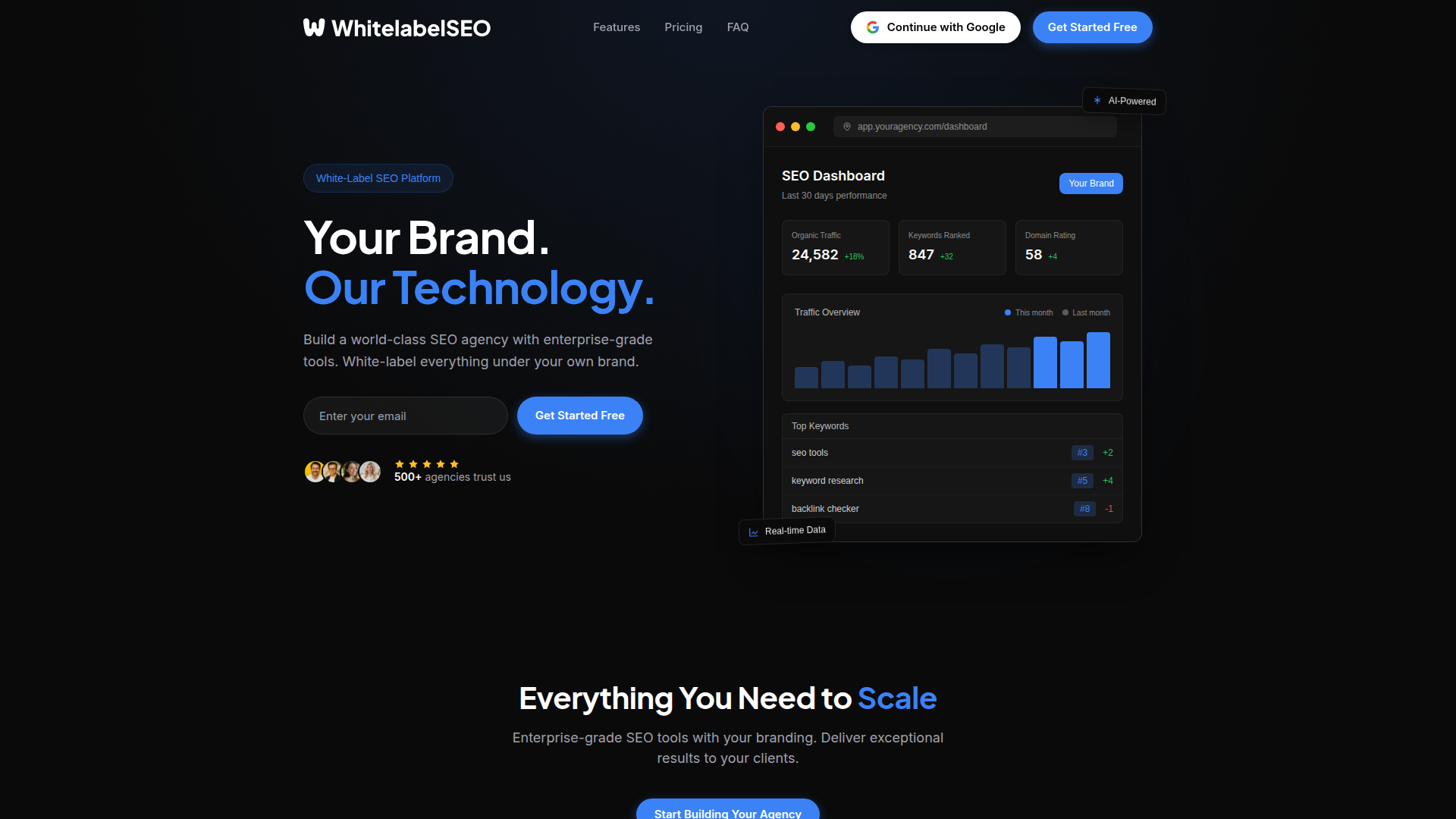
A white label seo tool lives or dies by two things: how clean the client-facing output looks, and how fast your team can ship results. WhitelabelSEOTool is built for SEO agencies, in-house marketing teams, and consultants who need branded reporting without duct-taping five different apps together.
The big draw is how it treats “white labeling” as more than a logo swap. You can present audits, rank tracking, and SEO performance metrics in a way that matches your agency branding solutions, down to templates and client-ready deliverables. That matters when you’re trying to reduce churn and improve client retention strategies.
It also fits real agency workflows. You can set up repeatable reporting, keep projects organized, and avoid the usual back-and-forth over what changed and why. If you’re comparing platforms, read the feature, pricing, and trade-off sections below, then map them to your client mix. If you want to see how it would look with your branding, try WhitelabelSEOTool with a pilot client and review the first report together before rolling it out broadly.
Key Features
WhitelabelSEOTool focuses on the parts of SEO delivery that clients actually notice. The reporting layer is the centerpiece, with automated reporting solutions that can be scheduled and shared as branded PDFs or dashboards. That makes monthly calls easier because everyone is looking at the same numbers.
On the SEO side, you get practical SEO audit functionalities that flag technical issues, on-page gaps, and basic site health signals. Pair that with performance tracking tools like rank monitoring and trend views, and you can show progress without drowning clients in raw data.
For agencies that manage many accounts, the project structure and templates help you repeat what works. It also plays well with data integration platforms, so you can pull in supporting context from other marketing channels when you need it. If you serve global clients, ask about 多国语言SEO工具 support and how reports handle different locales and search engines.
Pricing Info
Pricing for a white label seo tool usually depends on three levers: how many client projects you manage, how often you report, and which modules you turn on. WhitelabelSEOTool is typically positioned for agencies that want predictable monthly costs tied to usage, not surprise add-ons.
Expect plans to scale by client count and feature access, with higher tiers adding more automation, more branded assets, and deeper reporting options. If your agency has a mix of small local SEO resources clients and a few larger accounts, look for a tier that lets you segment reporting frequency. Weekly reports for one client and monthly for another can change your cost.
Before you commit, run the math on your current tool stack. If you’re paying separately for audits, rank tracking, and reporting, bundling those into WhitelabelSEOTool can be cheaper and easier to manage.
Pros and Cons
Pros & Cons
SE Ranking: Customizable SEO Platform for Agencies
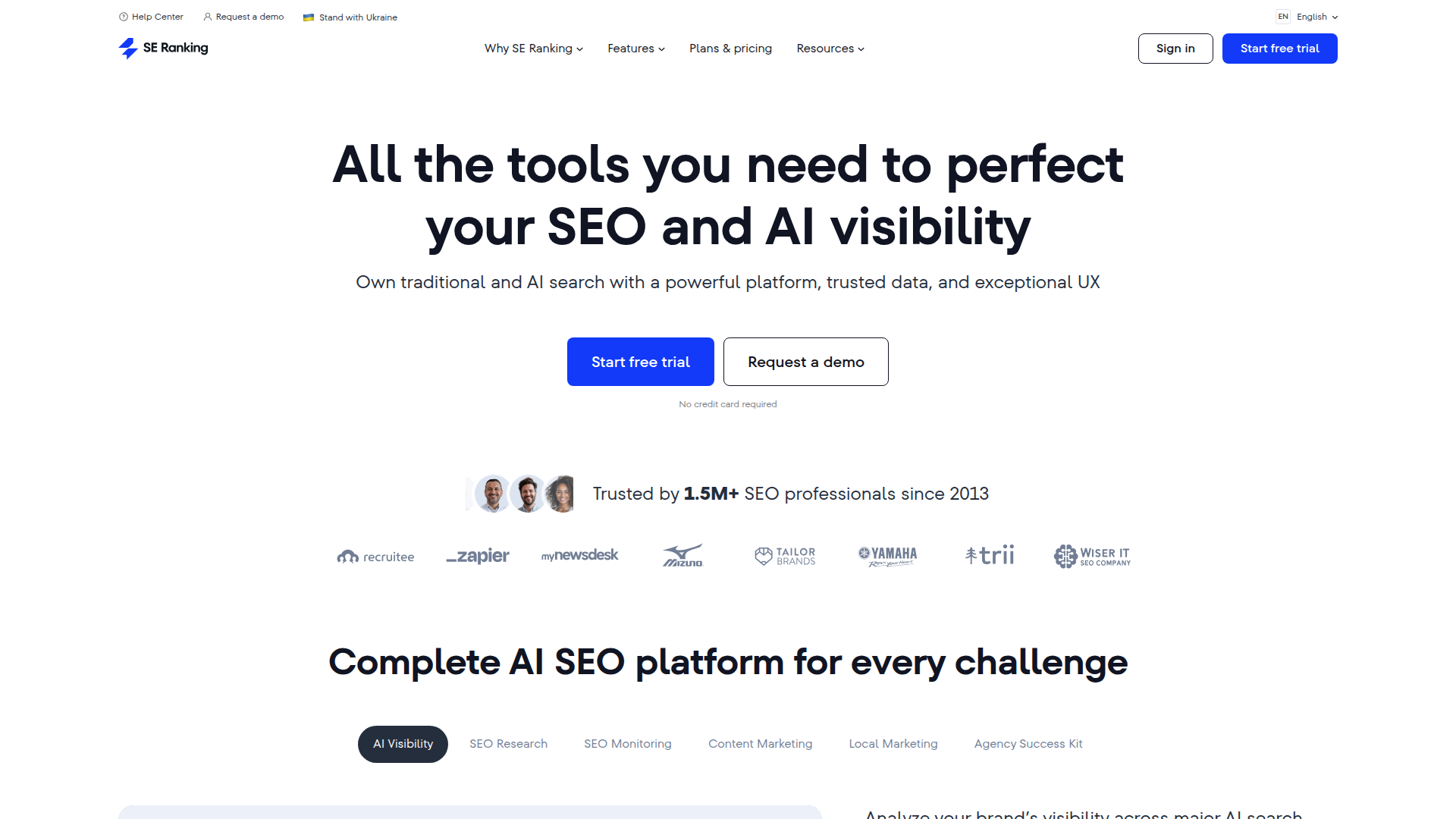
SE Ranking is a flexible platform that covers a lot of day-to-day SEO work in one place. Agencies often pick it when they want a broad toolkit with decent depth, plus client-facing reporting that can be branded.
Where it fits: mid-sized teams that need rank tracking, audits, and competitor analysis software without paying enterprise prices. It’s also a practical choice if you’re building repeatable packages, like “local SEO + content + reporting,” and you want one system to support the process.
As a white label seo tool, SE Ranking’s value is in how many core tasks it can handle without extra subscriptions. The trade-off is that you’ll want to test the reporting layouts with real clients. Some industries want simple charts, others want detailed issue lists.
If you’re already using a separate reporting suite, compare the time you spend each month building client updates. That’s usually where SE Ranking either pays for itself or doesn’t.
Key Features
SE Ranking includes rank tracking with flexible location/device settings, which is useful for local campaigns and multi-location brands. The site audit is solid for catching technical basics, and it’s easy to turn findings into a to-do list.
You also get keyword research and competitor views that help with planning content and spotting gaps. For agencies, the reporting and white-label options matter most. You can create branded reports and schedule delivery, which reduces manual work.
Client engagement tools are decent, especially if you use notes and annotations to explain ranking swings. That context helps during monthly reviews because clients don’t just see “up or down,” they see “why.”
Pricing Info
SE Ranking pricing is usually tiered by feature set and limits, like keyword tracking volume and the number of projects. Agencies should pay attention to tracking limits first, since that’s the cost driver for many accounts.
Lower tiers can work for consultants or small teams, while agency tiers add more reporting, user seats, and higher caps. If you plan to use it as your main white label seo tool, choose a plan that leaves headroom. Running at the limit every month is stressful.
A practical approach is to estimate your tracked keywords per client, then multiply by your expected client count in six months, not today. That prevents a quick upgrade right after onboarding new accounts.
Pros and Cons
Pros & Cons
Web CEO: Collaborative SEO Tools for Teams
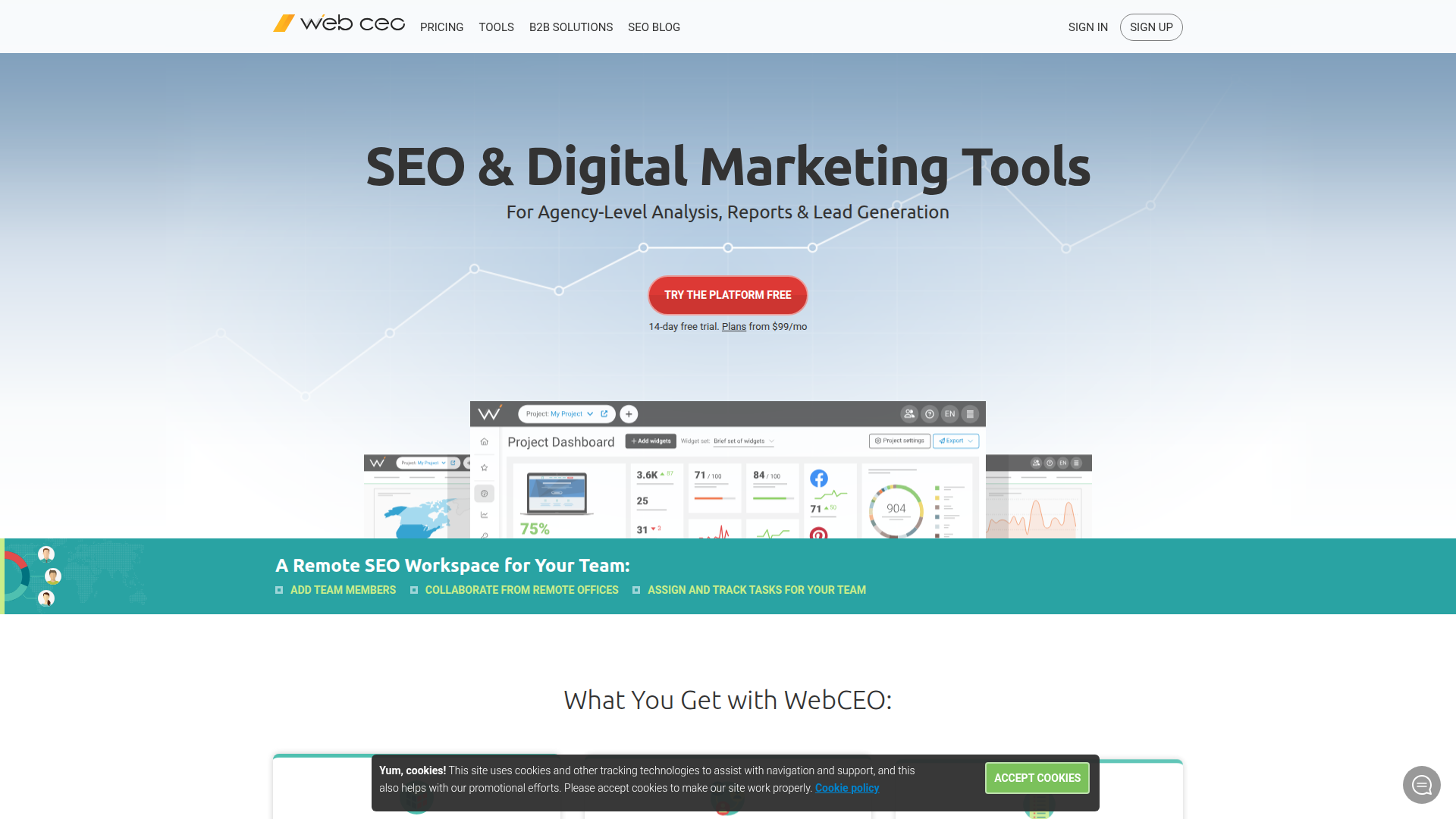
Web CEO is designed around teamwork. If your SEO process involves account managers, writers, and technical specialists, the collaboration angle can matter as much as the raw SEO features.
It covers the expected basics: audits, rank tracking, and reporting. The difference is how it supports shared workflows, task assignment, and visibility across a team. That’s helpful when you’re trying to avoid “tribal knowledge,” where only one person knows what’s going on.
As a white label seo tool, Web CEO is often used by agencies that need client-facing reports plus internal coordination. It’s also a decent fit for marketing teams that want a single place to track performance tracking tools and deliver updates.
If your biggest pain is handoffs, missed tasks, or unclear ownership, Web CEO is worth a close look. If your biggest pain is deep competitive research, you may want to compare it with more research-heavy platforms.
Key Features
Web CEO includes SEO audit functionalities, rank tracking, and reporting with branding options. The team features are the standout: you can manage tasks, share access, and keep work visible across roles.
For client work, the reporting tools help you package results into a consistent format. That consistency is a quiet driver of retention because clients learn how to read your reports over time.
Web CEO also supports integrations in many setups, which matters if you’re building a broader digital marketing software stack. If you’re pulling data from ads or analytics, check how cleanly it connects and whether the reporting layer keeps the story coherent.
Pricing Info
Web CEO pricing commonly scales by the number of projects, users, and feature access. Agencies should focus on user seats and collaboration needs. A tool can look cheap until you add the team members who actually need access.
If you’re using it as a white label seo tool, confirm what’s included in branded reporting, scheduled delivery, and client logins. Those features can be packaged differently across plans.
A good buying test is to model one full client cycle: onboarding, first audit, first report, and the second month’s update. If the plan you’re considering makes that flow easy, the price usually feels more reasonable.
Pros and Cons
Pros & Cons
Final Verdict

Choosing a white label seo tool comes down to what you’re really selling: insights, execution, or communication. If your agency wins on clear reporting and repeatable delivery, prioritize branding, automation, and templates. If you win on research depth, prioritize databases and competitor analysis software. If you win on service, prioritize collaboration and client engagement tools.
WhitelabelSEOTool is a strong fit when you want white labeling to feel native, not bolted on, and when you care about consistent client-facing output. SE Ranking is a practical all-in-one for many agencies that want breadth and flexible reporting. Web CEO makes sense when teamwork and task ownership are the main bottlenecks.
Before you commit, run a small pilot. Use one real client, one full month, and one report review call. That’s the fastest way to learn whether the tool supports your process, your brand, and your clients.