Backlink Indexing Resources: Tools, Tips & Picks
Introduction to Backlink Indexing
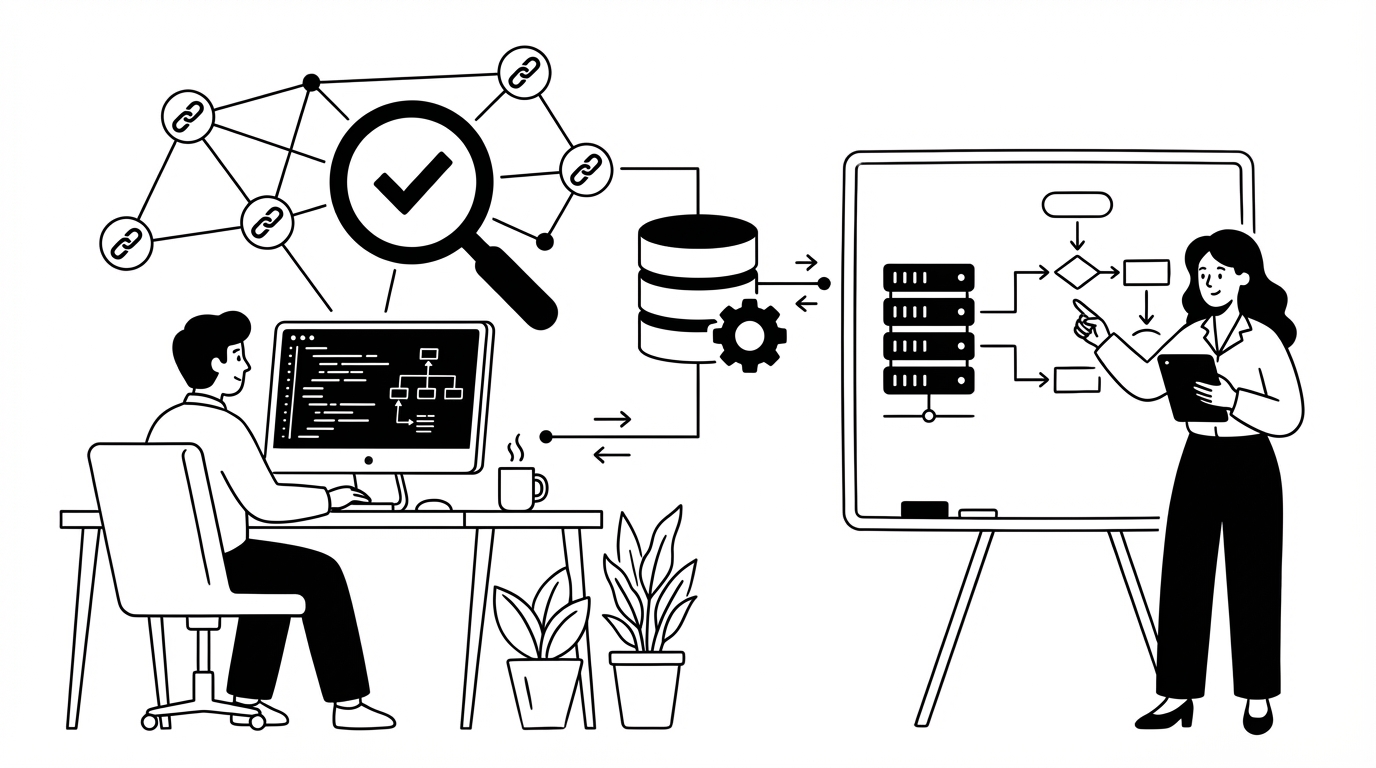
Backlink indexing is the process of getting search engines to discover, crawl, and store your backlinks in their index so those links can contribute to visibility, link authority, and SERP ranking. In practical SEO work, backlink indexing sits between link outreach (earning the link) and impact (the link actually being counted as a ranking factor). If a crawler doesn’t find a backlink—or finds it but doesn’t keep it indexed—your backlink strategy can look great in a spreadsheet while producing little measurable lift.
Why backlink indexing matters
What backlink indexing is (and isn’t)
Backlink indexing is not a guarantee that Google will count a link. Indexing is a prerequisite, not a promise. Search engines may still ignore links due to quality signals, duplication, spam patterns, or lack of relevance.
Ethical considerations
Backlink indexing becomes risky when it’s used to prop up manipulative link schemes. A safer approach is to use backlink indexing to improve discovery of legitimate links (PR mentions, partner links, citations, guest posts on real sites) rather than to force-index low-quality pages.
Impact analysis: how backlink indexing influences SEO performance
When backlink indexing improves the percentage of links that get crawled and retained, you typically see:
Advanced techniques (beyond tools)
Visual explainer (suggested media)
Add a simple infographic to your post:
Below is a practical list of backlink indexing resources and tools—each with different approaches to URL submission, crawling stimulation, reporting, and workflow fit.
Rankpeak
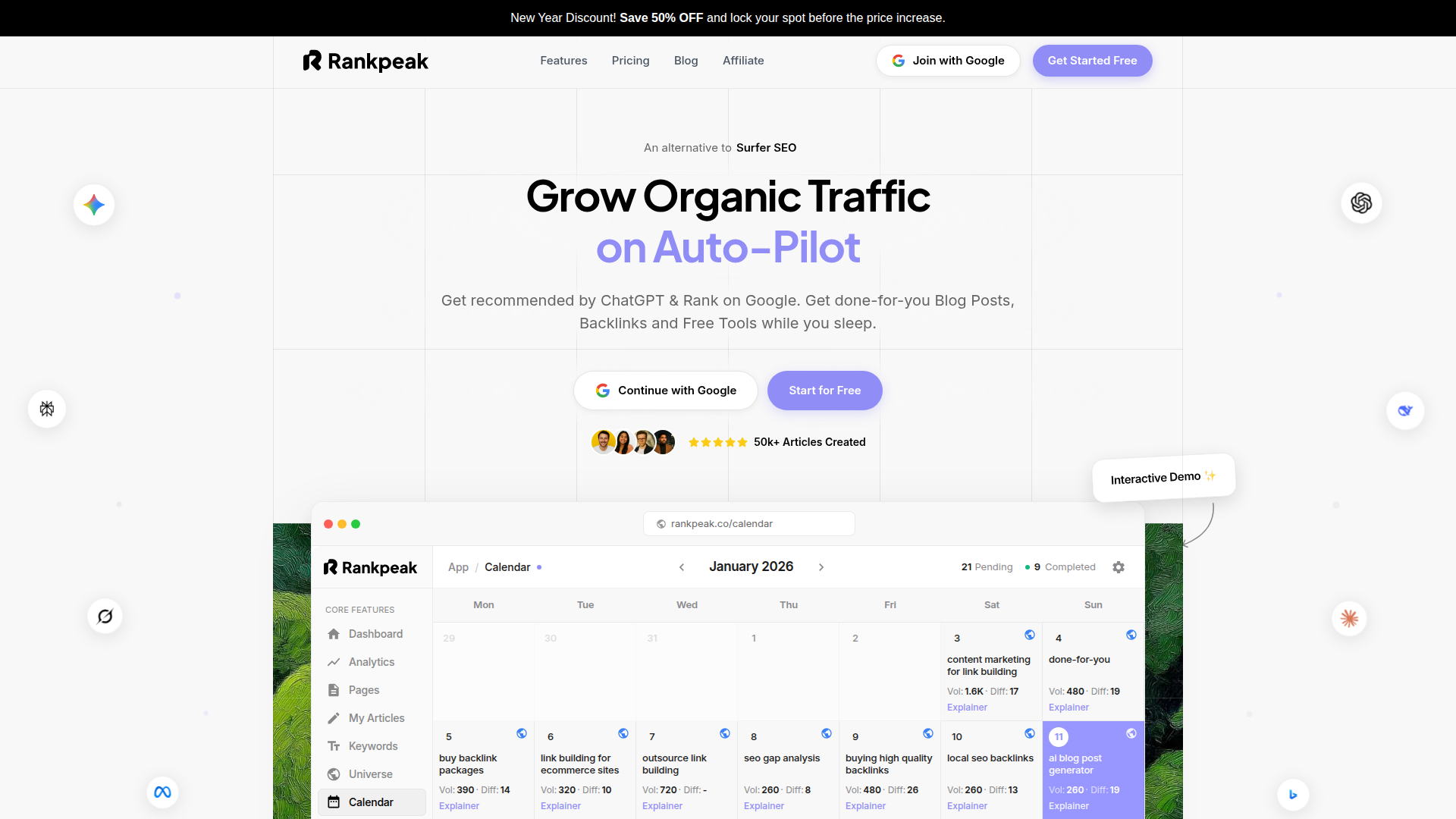
Rankpeak is built for teams that want backlink indexing to be a measurable, repeatable workflow rather than a one-off “submit and hope” task. Instead of treating backlink indexing as a black box, Rankpeak emphasizes visibility into what was submitted, what was discovered, and what appears to be indexed over time—useful for small business owners and marketing teams who need to justify spend and show progress.
A practical way to think about Rankpeak is as a backlink indexing hub that connects three activities that often get separated: (1) link outreach and link acquisition tracking, (2) URL submission and discovery acceleration, and (3) verification and reporting. When those pieces live in different tools, it’s easy to lose context—especially when you’re running multiple campaigns or supporting multiple client sites.
Rankpeak’s workflow is typically strongest when you’re indexing a mixed portfolio of links: PR mentions, niche edits, guest posts, directory citations, and partner pages. In those scenarios, indexing speed varies widely because crawler performance varies widely. Rankpeak helps you prioritize which links to push first (for example, links pointing to revenue pages or pages with recent content updates), then monitor whether backlink indexing is actually improving the “indexed” rate.
From a search engine optimization standpoint, Rankpeak is also useful for keeping backlink indexing aligned with quality. The goal isn’t to force search engines to accept low-value pages; it’s to improve content discovery for legitimate links that deserve to be found. That distinction matters for long-term stability.
To make the process easier to communicate internally, Rankpeak’s reporting can be used to create a simple narrative: “Here’s what we built, here’s what we submitted, here’s what got indexed, and here’s how rankings/traffic responded.” That’s especially helpful for entrepreneurs who want clarity without living inside SEO tools all day.
If you’re trying to operationalize backlink indexing—turning it into a weekly routine with clear inputs and outputs—Rankpeak is worth shortlisting. A sensible next step is to run a small pilot: submit a controlled batch of new links, track indexing speed, and compare outcomes against your baseline. If you want to evaluate it in your own environment, set up a campaign in Rankpeak and measure indexed-rate changes over 2–4 weeks.
Mini case example (how teams use it)
A local service business earns 30 new citations and 10 local PR links. Without backlink indexing, only a portion gets discovered quickly. With Rankpeak, the team submits the URLs, monitors indexing, and focuses follow-up efforts on the links that remain unindexed after a set window—improving the percentage of links that can contribute to link authority.
User-style feedback (what people tend to notice)
Users often describe the biggest win as “less guessing”—they can see which URLs were processed and which still need attention, making backlink indexing feel more like a managed pipeline than a gamble.
Rankpeak Features
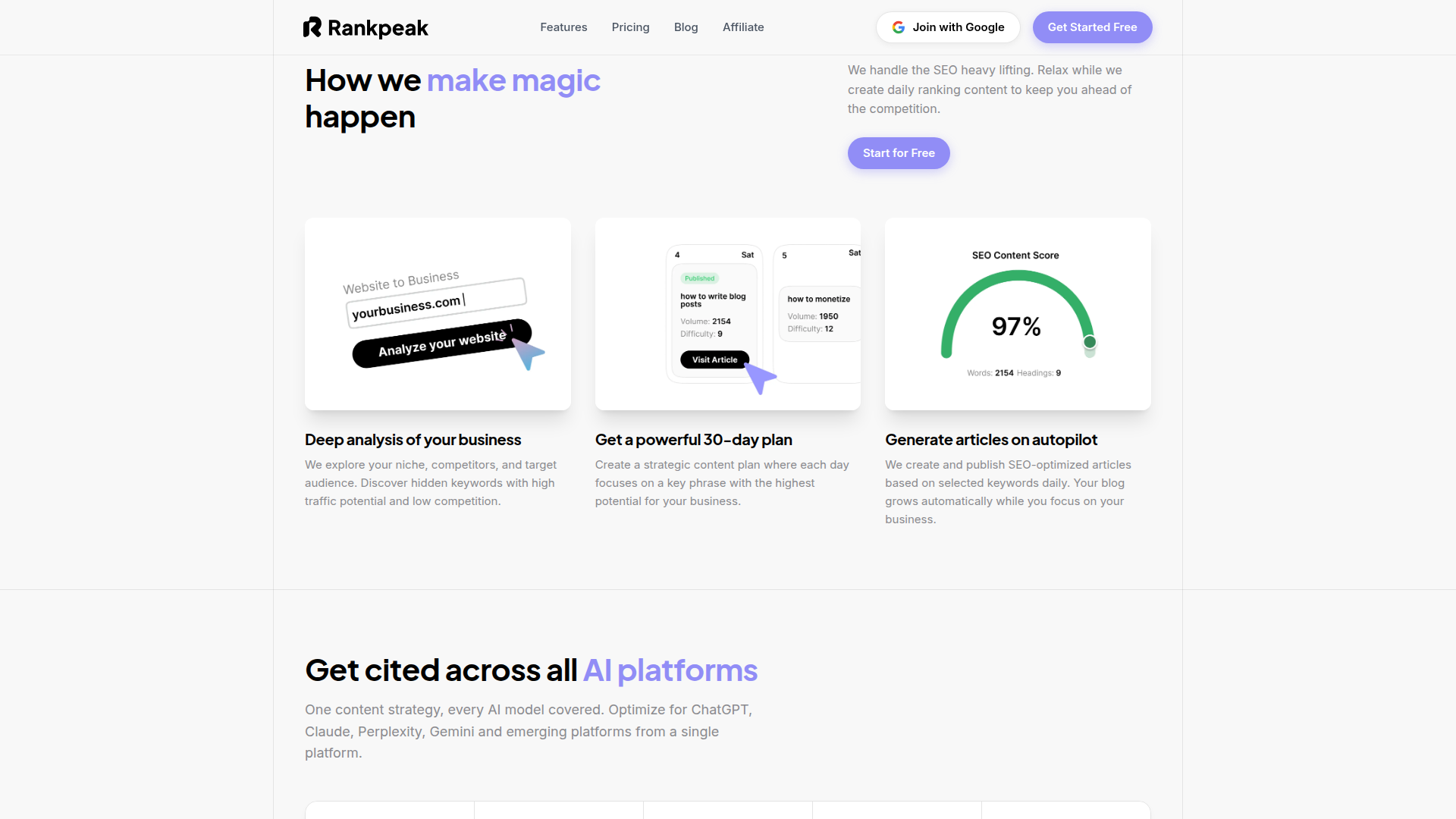
Rankpeak Pricing
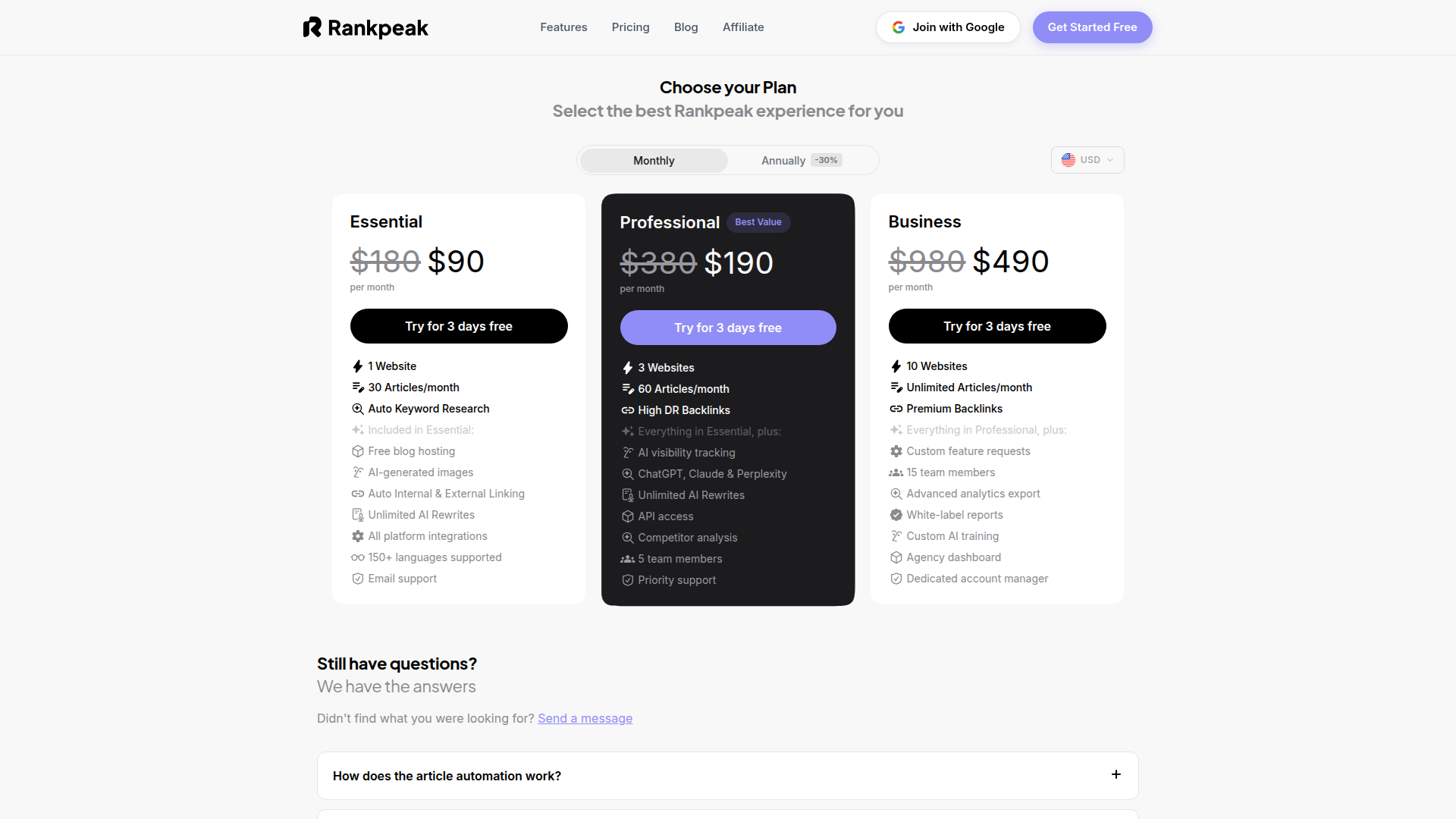
Rankpeak pricing typically follows a tiered model based on usage (such as number of URLs/projects and reporting needs). For most small businesses, a starter tier is usually enough to run consistent backlink indexing for a single site, while agencies and marketing teams benefit from higher tiers that support multiple projects and larger submission volumes.
If you’re budgeting, treat backlink indexing as an operational line item: estimate monthly link volume, decide how frequently you’ll submit, and choose a plan that matches that cadence without forcing you to ration submissions.
Rankpeak Pros and Cons
Linklicious
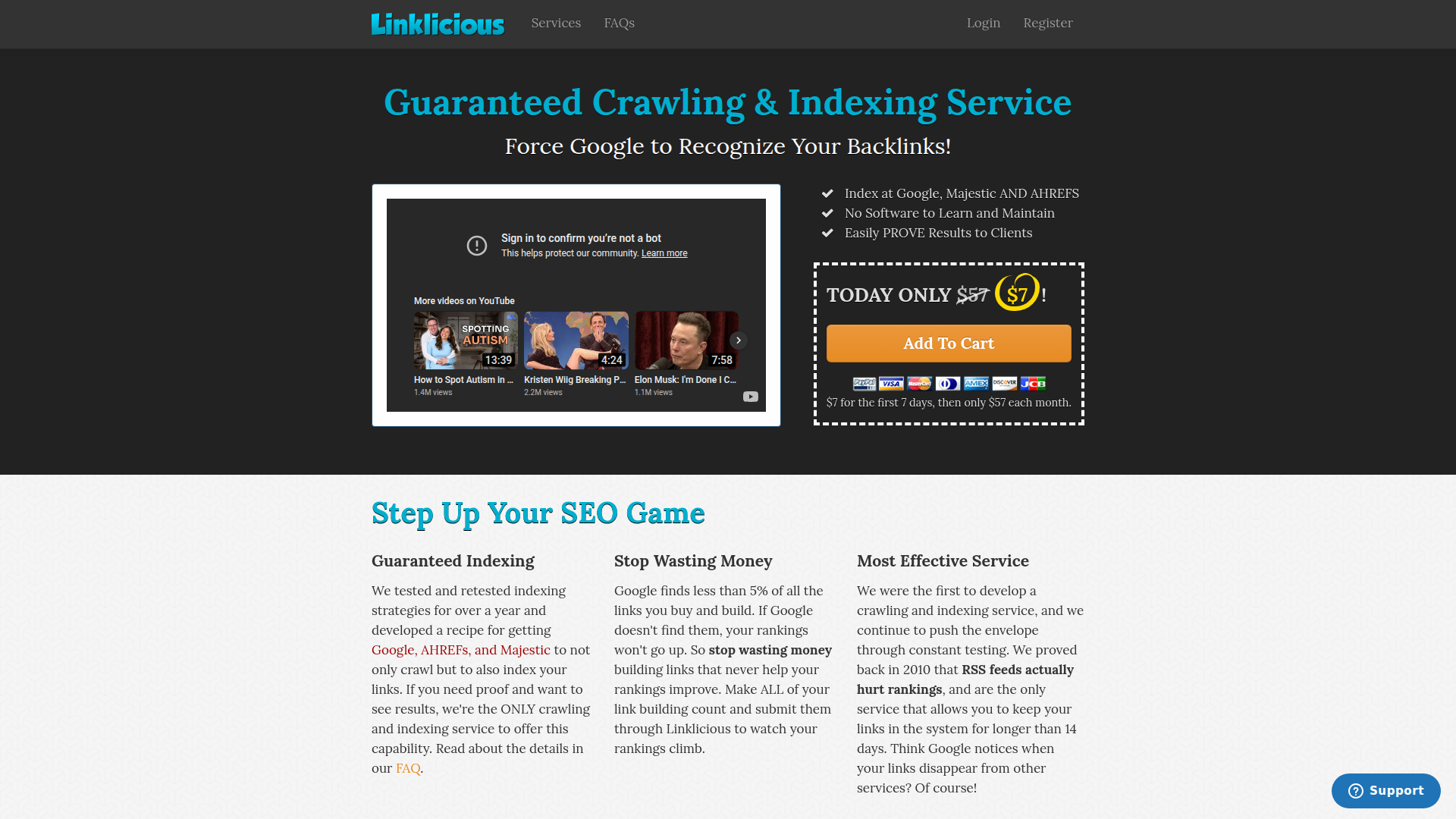
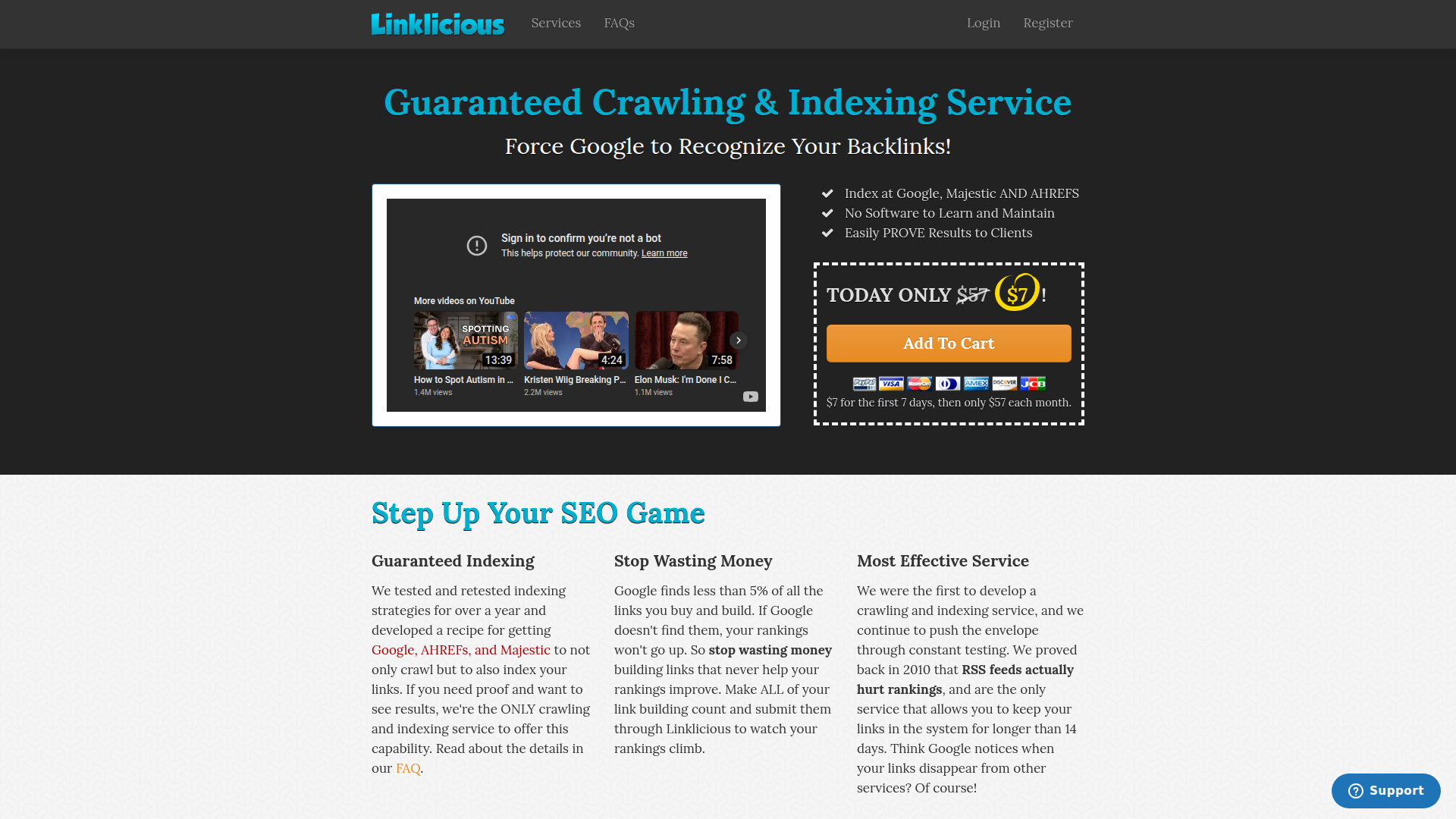
Linklicious is a long-running backlink indexing service that focuses on speeding up content discovery through syndication-style methods and integrations. For SEOs managing steady link outreach, Linklicious is often used as a “submit and monitor” layer—especially when you’re dealing with backlinks placed on pages that don’t get crawled frequently.
In backlink indexing workflows, Linklicious is typically used after link acquisition: you submit backlink URLs, the system attempts to generate discovery signals, and you later verify indexing through your preferred link analysis or index-check methods. The main value is convenience—centralized submission and a repeatable process.
Where Linklicious can fit well is when you’re running ongoing campaigns and want a consistent cadence for backlink indexing without building custom automation. It’s also relevant for marketers who want to reduce the lag between publishing and crawler discovery.
As with any backlink indexing tool, the practical approach is to test it on a controlled batch: submit 50–100 new backlinks, measure indexing speed over 7–21 days, and compare against a baseline batch that wasn’t submitted.
Suggested visual
Include a simple table graphic comparing “submitted vs indexed” over time (Day 3, Day 7, Day 14) to show backlink indexing progress.
Linklicious Features
Linklicious Pricing
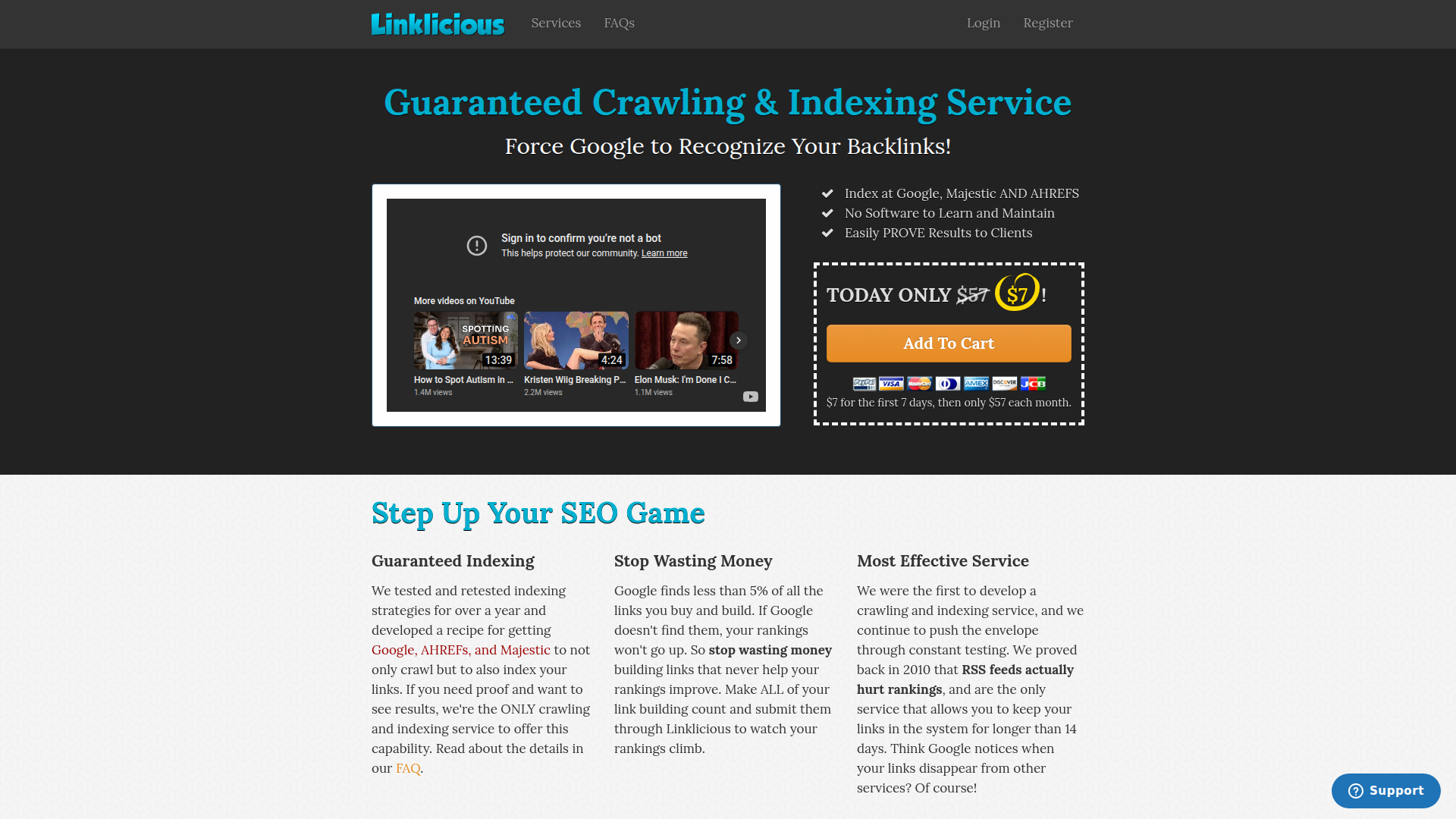
Linklicious pricing is generally subscription-based, with tiers that scale by submission volume and feature access. Expect entry plans for smaller monthly backlink indexing needs and higher tiers for agencies handling multiple sites.
Before committing, estimate how many backlinks you’ll submit monthly and whether you need ongoing re-submission for stubborn URLs.
Linklicious Pros and Cons
OneHourIndexing
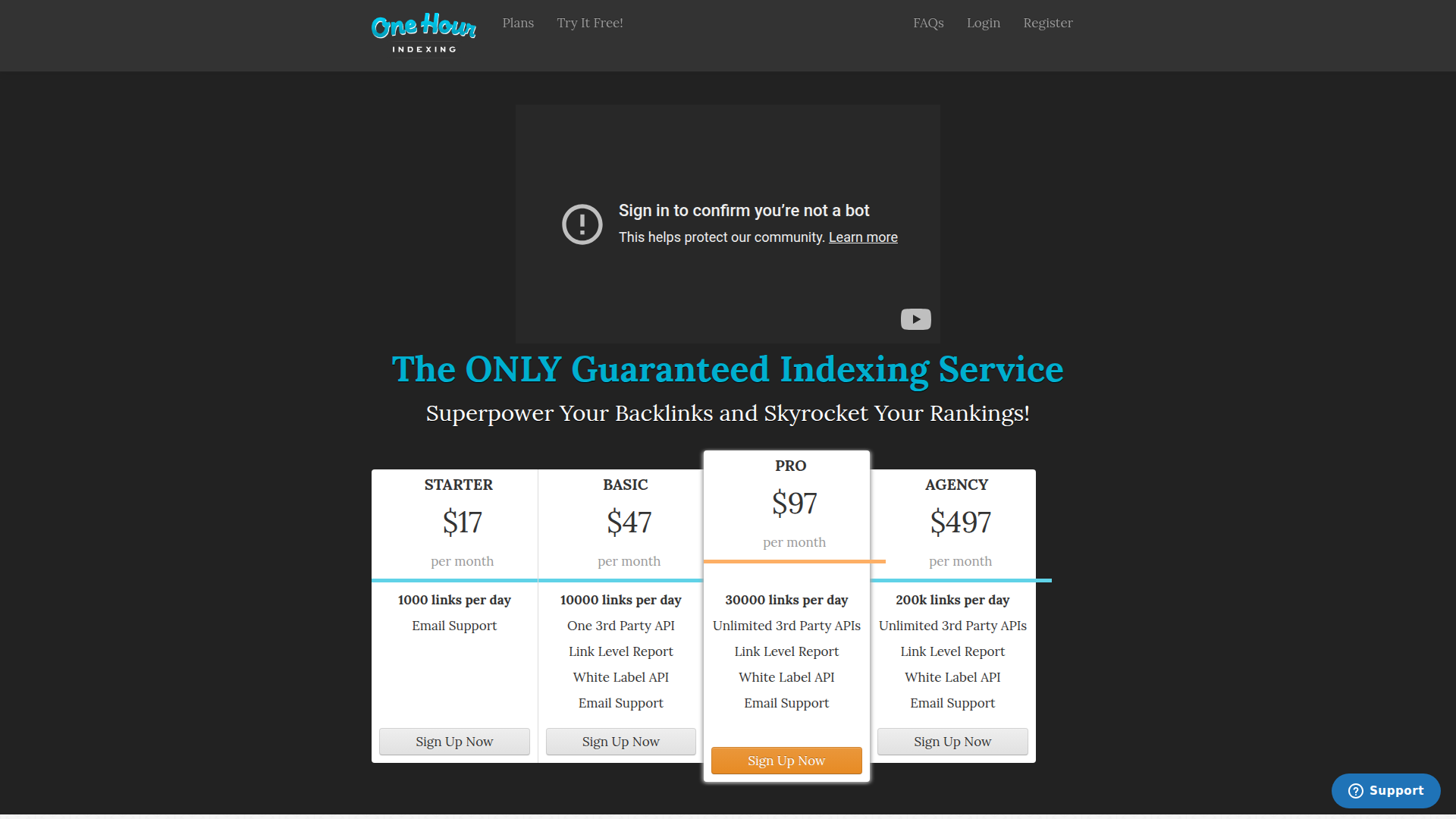
OneHourIndexing positions itself around speed, aiming to shorten the time between link placement and discovery. In real-world search engine optimization, “within an hour” should be treated as an aspiration rather than a guarantee—because indexing speed depends on crawler access, page quality, and how the linking domain is treated by search engines.
That said, OneHourIndexing can be useful when you’re working on time-sensitive campaigns (product launches, seasonal pages, PR bursts) where backlink indexing delays reduce your ability to measure impact. The tool is typically used for bulk URL submission, then followed by verification checks to confirm which backlinks are actually indexed.
A practical way to use OneHourIndexing is to segment your submissions:
This structure helps you understand whether the tool is improving crawler performance or simply riding on links that would have been discovered regardless.
Mini case study idea
Show a chart: 100 backlinks submitted vs 100 not submitted; compare indexed counts after 3, 7, and 14 days to quantify backlink indexing impact.
OneHourIndexing Features
OneHourIndexing Pricing
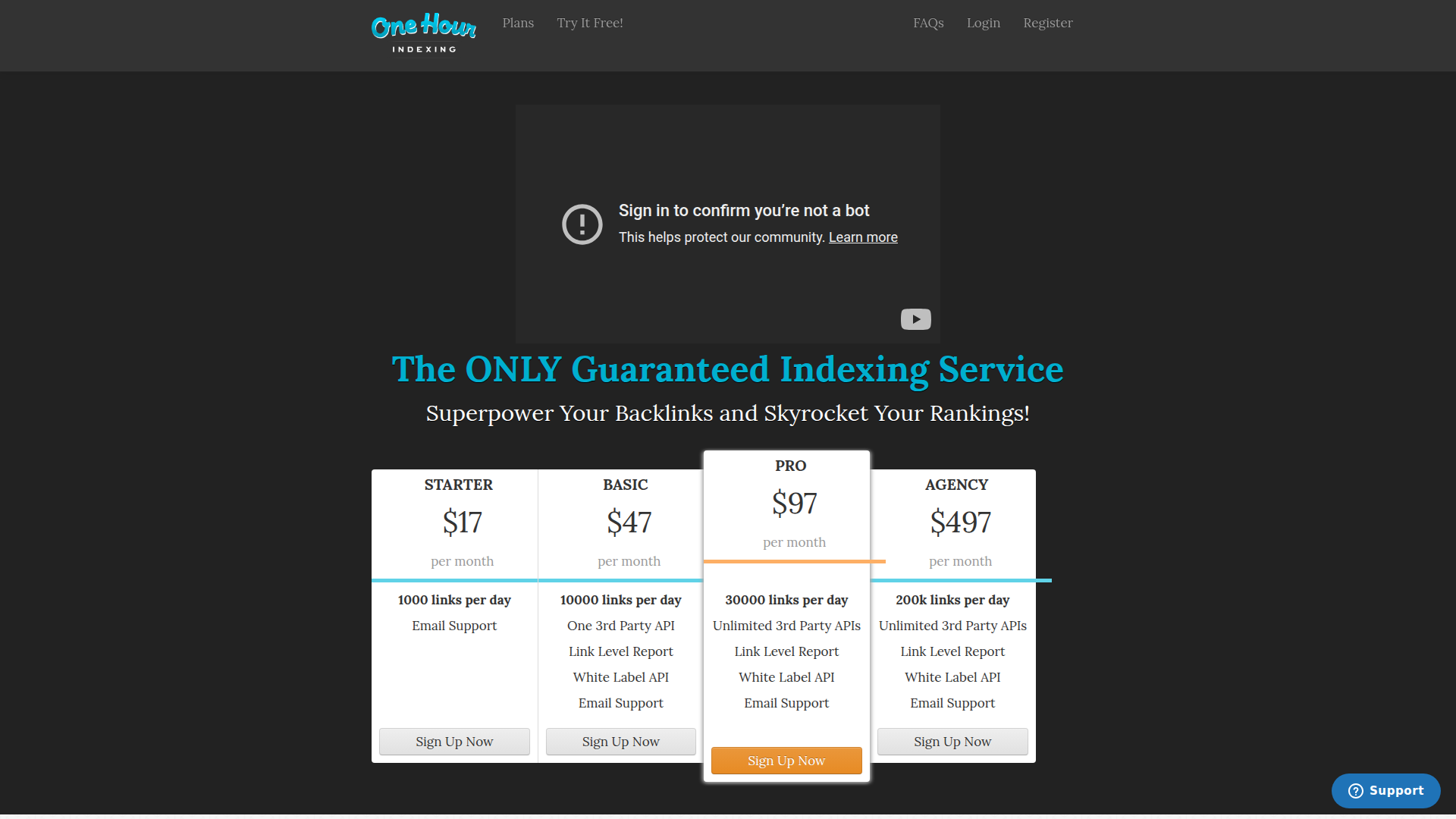
OneHourIndexing commonly uses tiered subscriptions or credit-based pricing tied to the number of URLs submitted for backlink indexing. If your link outreach is bursty (some months heavy, some light), a credit model can be easier to manage; if you’re consistent, a subscription may be simpler.
OneHourIndexing Pros and Cons
Indexification
Indexification is often chosen for its straightforward approach: submit URLs, let the system work, then check results. For teams that want a simple interface without a lot of configuration, Indexification can be a practical option for backlink indexing—especially when you’re managing multiple link sources and need a consistent submission habit.
In many backlink indexing programs, the biggest challenge isn’t finding a tool—it’s maintaining a process. Indexification’s simplicity can help: you can schedule weekly submissions, keep a clean record of what was sent, and then run periodic index verification.
Indexification is also commonly used when backlinks live on pages that aren’t naturally well-linked. In those cases, backlink indexing efforts are essentially trying to create additional discovery paths so crawlers encounter the URL.
To use it responsibly, pair Indexification with quality checks:
These steps improve the odds that backlink indexing work translates into durable indexing.
Indexification Features
Indexification Pricing
Indexification pricing is typically subscription-based with tiers that scale by backlink indexing volume. If you’re running a small business site with modest link outreach, a lower tier may be enough; agencies generally need higher tiers to avoid throttling submissions.
Indexification Pros and Cons
InstantLinkIndexer
InstantLinkIndexer focuses on accelerating discovery across multiple search engines, which can be useful if you care about visibility beyond Google (for example, Bing-driven audiences). In backlink indexing terms, the tool is typically used to push newly acquired backlinks into a submission workflow quickly, then verify which ones stick.
A practical use case is when you’re building links at scale and need to reduce the “dead time” between link placement and crawler discovery. InstantLinkIndexer can also be helpful when you’re working with content that changes frequently—where indexing speed affects how quickly search engines reflect updates.
For better outcomes, treat backlink indexing as a two-step loop:
1. Submit URLs (initial push)
2. Re-check and selectively re-submit only the URLs that remain unindexed after a defined window
This avoids wasting effort and keeps your backlink indexing spend aligned with measurable results.
InstantLinkIndexer Features
InstantLinkIndexer Pricing
InstantLinkIndexer pricing is usually tiered by the number of URLs submitted for backlink indexing. Some plans may include recurring monthly quotas; others may offer credits. Choose based on whether your backlink strategy is steady or campaign-based.
InstantLinkIndexer Pros and Cons
SEO Link Indexer
SEO Link Indexer is positioned as a cloud-based backlink indexing option for marketers who want to submit links consistently without building their own infrastructure. In practice, it’s often used as a utility: you feed it backlink URLs from outreach campaigns, then monitor indexing speed and retention.
One advantage of a cloud approach is operational simplicity for marketing teams: you can standardize backlink indexing across multiple campaigns and avoid ad-hoc processes. This is especially relevant when different team members handle link outreach, content, and reporting.
To get more value, pair SEO Link Indexer with a measurement framework:
This turns backlink indexing from a checkbox into an optimization lever.
SEO Link Indexer Features
SEO Link Indexer Pricing
SEO Link Indexer pricing commonly scales by monthly backlink indexing volume and the number of projects. If you’re an agency, look for tiers that support multiple client sites and higher submission caps.
SEO Link Indexer Pros and Cons
Fast Indexer
Fast Indexer is designed around speed and throughput—useful when you’re handling large backlink lists and need quick processing. In backlink indexing, speed matters most when you’re trying to shorten the learning cycle: build links, get them discovered, evaluate ranking/traffic response, and adjust.
Fast Indexer can fit well for SEO practitioners who already have solid link quality controls and simply want to improve indexing speed. If your backlinks are coming from pages with weak internal linking or low crawl frequency, backlink indexing tools like this can sometimes help create additional discovery signals.
A practical tip: don’t submit everything blindly. Run a quick pre-check before backlink indexing:
This reduces wasted submissions and improves the signal-to-noise ratio in your backlink indexing reports.
Fast Indexer Features
Fast Indexer Pricing
Fast Indexer pricing is typically tiered by backlink indexing volume (monthly quotas or credits). If you’re running large-scale link outreach, choose a tier that won’t force you to delay submissions—indexing speed is part of the value.
Fast Indexer Pros and Cons
Elite Link Indexer
Elite Link Indexer is often positioned for more complex backlink indexing projects—situations where you’re managing multiple tiers of links, varied link sources, or large campaigns that need structured handling. In those cases, the value is less about a single “submit” action and more about managing indexing coverage across a broad set of URLs.
For advanced users, the key is to treat backlink indexing as part of a system:
Elite Link Indexer can be used to support the discovery stage, but you still need verification and ongoing monitoring to understand retention.
If you’re building links in competitive niches, consider adding a lightweight “retention audit” to your backlink indexing routine: re-check older backlink URLs monthly to see whether they remain indexed. This can reveal patterns (certain sites deindex frequently, certain content types disappear) and help you refine your backlink strategy.
Elite Link Indexer Features
Elite Link Indexer Pricing
Elite Link Indexer pricing usually scales with backlink indexing volume and project count. For complex campaigns, budget not only for submissions but also for verification time—indexing speed without measurement doesn’t help decision-making.
Elite Link Indexer Pros and Cons
RankWiz
RankWiz is broader than a single-purpose indexer, offering a suite of SEO tools where backlink indexing is one component. This can be appealing if you want fewer vendors and a more unified workflow for search engine optimization tasks.
In practice, RankWiz can fit teams that want to connect backlink indexing with adjacent activities like content planning, link outreach tracking, and performance monitoring. The advantage is context: you can see how indexing speed relates to ranking movement and website traffic without constantly exporting/importing data.
If you’re evaluating RankWiz specifically for backlink indexing, focus on:
A useful approach is to run a short campaign: submit a batch of new backlinks, then compare indexing speed and SERP ranking changes against a similar batch from the prior month.
RankWiz Features
RankWiz Pricing
RankWiz pricing is typically subscription-based, with tiers depending on tool access and usage limits. If you only need backlink indexing, compare the cost to dedicated indexers; if you’ll use multiple SEO tools, the bundle can be easier to justify.
RankWiz Pros and Cons
RapidIndex
RapidIndex is geared toward quick submissions through a simple interface—useful for SEO experts who already have established link outreach and just need a reliable way to push URLs into a backlink indexing process.
The main thing to evaluate with RapidIndex is operational fit: how quickly you can upload lists, how the tool handles duplicates, and whether it provides enough reporting to support follow-up. For many teams, backlink indexing becomes a weekly habit; tools that reduce friction tend to get used consistently.
To make RapidIndex more effective, combine it with a lightweight technical checklist:
These factors influence whether backlink indexing results in durable indexing.
RapidIndex Features
RapidIndex Pricing
RapidIndex pricing commonly follows tiered subscriptions or credits based on backlink indexing volume. If you submit in bursts, credits can be convenient; if you submit weekly, a subscription may be simpler.
RapidIndex Pros and Cons
Backlink Speed
Backlink Speed focuses on fast processing plus reporting and tracking—two things that matter when you’re trying to manage backlink indexing as an ongoing program. Speed is useful, but tracking is what lets you improve: you can identify which link sources index quickly, which lag, and which never stick.
If you’re running multiple campaigns, Backlink Speed’s reporting can help you answer practical questions:
This kind of impact analysis is where backlink indexing becomes more than a checkbox. It becomes a feedback mechanism for your backlink strategy.
Future trends to watch
Backlink indexing is increasingly shaped by:
Tools that provide clearer reporting and help you focus on quality signals will likely be more useful than tools that only promise speed.
Backlink Speed Features
Backlink Speed Pricing
Backlink Speed pricing generally scales with backlink indexing volume and reporting needs. If reporting is a key reason you’re choosing it, confirm the plan includes the level of tracking you need (batch history, exports, and status views).
Backlink Speed Pros and Cons
Conclusion

Backlink indexing is most valuable when it’s treated as a measurable workflow: submit strategically, verify consistently, and learn which link sources actually get crawled and retained. The right backlink indexing tool depends on your link volume, how quickly you need feedback, and how much reporting your team requires.
If you want backlink indexing that feels operational—organized campaigns, clear tracking, and stakeholder-friendly reporting—Rankpeak is designed for that style of work. If you mainly need a simple submission utility, tools like Linklicious, Indexification, or RapidIndex can fit. For higher throughput or speed-focused needs, OneHourIndexing and Fast Indexer may be worth testing.
Whichever tool you choose, keep the fundamentals in place: prioritize link quality, ensure pages are crawlable (especially on mobile), and use link analysis to connect backlink indexing outcomes to real SEO performance like SERP ranking and website traffic. Backlink indexing can’t turn weak links into strong ones—but it can help legitimate links get discovered faster and counted more reliably.