SaaS link building tools compared for 2024
Introduction: Choosing the Right SaaS Link Building Tool

SaaS link building is one of those jobs that sounds simple until you’re doing it at scale. You need good prospects, a reason to reach out, and a way to track what actually moved rankings, traffic, and sign-ups.
A solid tool won’t “do link building for you.” What it can do is cut the busywork, reduce mistakes, and help you focus on the parts that matter: creating value, earning authority backlinks, and building relationships that last.
What to look for before you pick a tool
Different teams need different things. A founder doing SEO for SaaS on nights and weekends won’t buy the same setup as a marketing team running multiple campaigns.
Here are the criteria that usually decide whether a tool feels helpful or painful:
SaaS link building vs other industries
SaaS has a few quirks:
Common pitfalls (and how tools help)
A few mistakes show up again and again:
A simple, repeatable process
If you want a baseline workflow that fits most digital marketing for SaaS teams, use this:
The tools below support different parts of that process. Rankpeak is first because it’s built for small teams that need clarity and momentum. Then we’ll cover platforms like SEMrush, Ahrefs, BuzzSumo, Moz, Pitchbox, Linkody, Majestic, and NinjaOutreach.
Rankpeak: Tailored for Small Business Owners
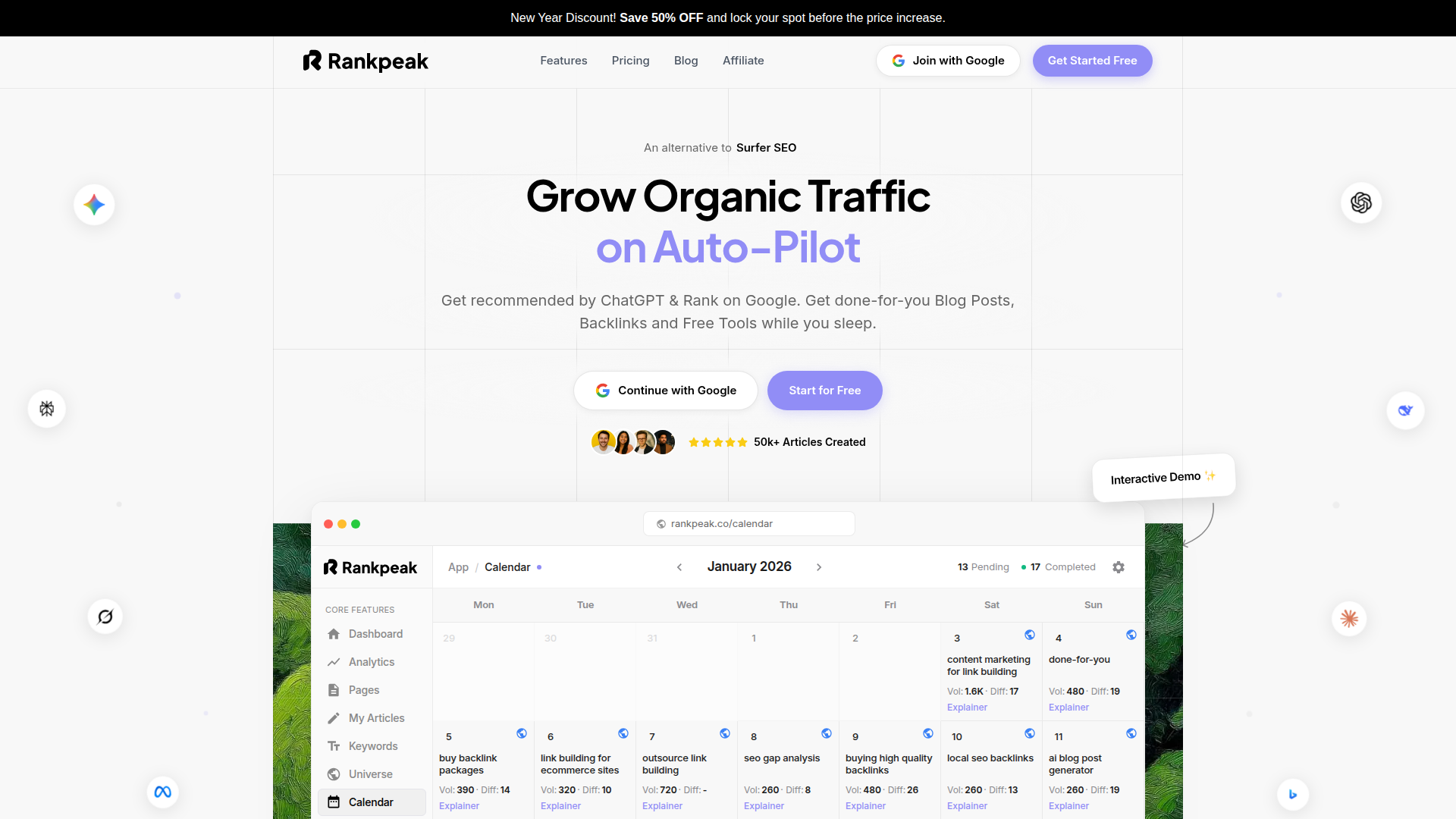
Rankpeak is built for small business owners and lean marketing teams who want a clear path from “we should build links” to “we shipped a campaign and can see what happened.” It focuses on the parts that usually slow people down: choosing targets, keeping outreach organized, and turning link data into next steps you can actually follow.
A lot of SaaS link building fails for boring reasons. The list is messy. The outreach is inconsistent. Nobody remembers which angle worked. Rankpeak is designed to keep those basics tight, so you can spend more time on content marketing and inbound marketing, not spreadsheet cleanup.
What stands out is how it supports decision-making. Instead of throwing every metric at you, Rankpeak helps you prioritize prospects based on relevance and likely impact. That matters in SEO for SaaS, where one strong, relevant mention can beat ten weak links that never send referral traffic.
Rankpeak also fits teams that care about brand visibility and online reputation management. If you’re doing outreach under a founder’s name or a small brand, you can’t afford sloppy follow-ups or mismatched pitches. Having a consistent workflow helps you stay professional, even when you’re moving fast.
It’s also a good match if you’re building links around assets like:
Those assets tend to earn authority backlinks over time, and Rankpeak’s tracking makes it easier to see which pages are gaining link equity and which ones need a refresh.
Key Features
Rankpeak’s core capabilities are aimed at making link building manageable for small teams:
Pricing Information
Rankpeak is positioned for small businesses that need predictable costs. Pricing is typically structured in tiers, based on things like the number of campaigns, users, and tracked domains.
If you’re comparing tools for SaaS link building, ask two questions before you commit:
Those answers usually tell you which tier fits without paying for features you won’t use.
Pros and Cons
Pros
Cons
If you’re trying to make SaaS link building repeatable without hiring a full SEO department, Rankpeak is worth a serious look. Start by running one campaign around a single “linkable” asset, then measure referral traffic and ranking movement for 30 days. If the workflow feels natural, expand from there.
SEMrush: Comprehensive SEO and Backlink Strategies
SEMrush is a broad SEO suite, and that’s both the appeal and the trade-off. For SaaS link building, it’s useful when you want link work to sit next to keyword research, technical audits, and competitor tracking.
If your team is doing digital marketing for SaaS across multiple channels, SEMrush can act like a shared source of truth. You can research competitors, find content gaps, and then connect that to backlinking strategies that support the pages you’re trying to rank.
SEMrush is also a practical choice when you need to explain link building to stakeholders. The platform’s reports are familiar to many marketers, and it’s easier to show how links support organic search growth, domain authority trends, and brand visibility.
That said, some teams find “all-in-one” tools distracting. If you only need outreach and link monitoring, SEMrush can feel like more than you asked for.
Key Features
For link-focused work, SEMrush is usually used for:
Pricing Information
SEMrush pricing is tiered and generally increases with limits like projects, tracked keywords, and report access. Most SaaS teams start with a standard plan, then move up if they need more reporting, more projects, or agency-style workflows.
If you’re budgeting for SaaS link building, remember to factor in seats. Marketing teams often need more than one login, and that can change the real monthly cost.
Pros and Cons
Pros
Cons
Other tools worth considering (quick comparisons)
The outline here focuses on Rankpeak and SEMrush, but most teams compare a wider set. Here’s how the other common options fit into a SaaS link building stack:
If you’re building a workflow, a common pairing is a focused tool like Rankpeak for campaign execution plus a research-heavy platform like SEMrush or Ahrefs for discovery.
Conclusion: Comparing SaaS Link Building Tools

Choosing tools for SaaS link building comes down to your team size, your process, and what you already have covered. A founder-led team usually needs structure, prioritization, and simple reporting. A larger marketing team may need deeper competitive research and cross-channel SEO features.
Rankpeak makes sense when you want a clean workflow that keeps campaigns organized and measurable. It’s built for small business owners and lean teams who need to move from idea to outreach without getting buried in complexity. If you’ve struggled to keep link building consistent, Rankpeak’s approach can help you build habits that stick.
SEMrush fits when link work is part of a bigger SEO program. It’s strong for competitor analysis, content planning, and reporting that ties backlinks to organic search goals.
No matter which platform you pick, the fundamentals don’t change. Earn links by publishing something worth citing, pitch the right people with a clear reason, and track what drives referral traffic and customer acquisition. Do that for a few months, and your domain authority and link equity usually follow.
If you want a practical next step, pick one linkable asset, run a small outreach campaign, and measure results. That single cycle will tell you more than hours of tool demos.