Link Building Cost Explained: Budget, ROI, and Tips
What is Link Building Cost?
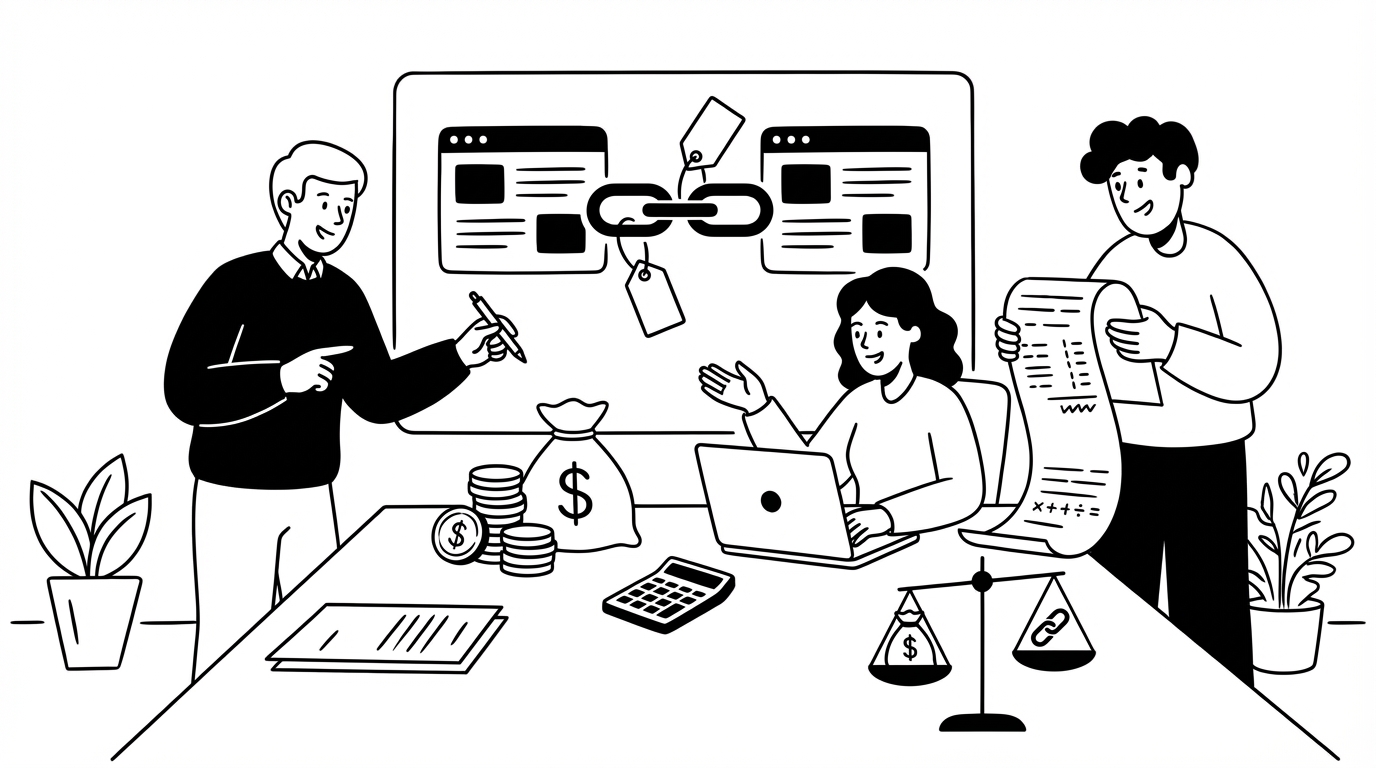
Link building cost is the total time and money you spend to earn backlinks from other websites. Those links can help your pages show up higher in search results, but they’re never truly “free.” Even if you don’t pay for placements, you still pay in hours, content creation, outreach, and follow-up.
Think of it like planting a garden. Seeds might be cheap, but the real cost is the soil, tools, water, and patience. With link acquisition, the “tools” are your content, your relationships, and your process.
What you’re really paying for
Most budgets cover a mix of these pieces:
Typical pricing models you’ll see
Even when people talk about “pricing,” they often mean different things. Common models include:
Why costs vary so much
Two campaigns can look similar on paper and still cost very different amounts. The biggest drivers are:
A simple way to estimate your budget
If you want a quick back-of-the-napkin estimate, start here:
This won’t be perfect, but it stops you from guessing.
Link building cost vs other SEO pricing
SEO pricing often bundles technical fixes, content, and links together. That can be fine. But links have their own economics because they depend on other people saying “yes.” That uncertainty is why link acquisition is often the most expensive part of organic search growth.
What “cheap” can really mean
Low prices can mean:
Sometimes you’ll still see movement at first. Then it fades, or worse, you inherit a cleanup project.
The hidden cost: opportunity cost
There’s also the cost of what you didn’t do. If your team spends 30 hours a month pitching weak sites, that’s 30 hours not spent improving content, fixing pages, or building partnerships that last.
A good budget isn’t just about spending less. It’s about spending in a way that compounds over time.
Why Link Building Matters

Links are still one of the clearest signals of trust on the web. A backlink is like a public reference. When a relevant site points to you, it tells search engines your page is worth showing.
That’s why link building cost is often treated as a core digital marketing expense, not a nice-to-have. If you’re in a competitive space, links can be the difference between page one and page five.
Links support search engine rankings
Search engines look at many signals, but links help answer a simple question: “Do other people vouch for this page?”
Strong links can help you:
Links drive referral traffic too
Not every link is about rankings. A link from a busy newsletter, a local news site, or a niche blog can send real visitors.
That matters because:
Links build brand authority over time
When your brand shows up across trusted sites, people start to recognize you. That’s hard to measure, but you feel it in sales calls and email replies.
A strong backlink strategy can also support:
Links can lower your long-term traffic generation costs
Paid ads stop the moment you stop paying. Organic search can keep sending traffic for months or years.
That’s why many teams accept a higher link building cost upfront. They’re buying an asset that can keep producing.
Links help local SEO in a very practical way
For local businesses, links can improve local search visibility, especially when they come from:
These links often don’t look “SEO fancy.” They’re still powerful because they match real-world relevance.
Links help you compete when content is similar
In many industries, everyone has the same basic blog posts. “How to choose X,” “X vs Y,” “What is X.”
When content is close, links can be the tie-breaker. They’re a way to show that your page is the one people reference.
The real reason link building feels expensive
You’re not paying for a link. You’re paying for persuasion.
You’re asking someone to:
That’s why quality outreach and good assets matter so much.
How Link Building Works
Link building is the process of earning links from other websites to your pages. The clean version is simple: create something useful, tell the right people about it, and make it easy for them to reference.
In real life, it’s a system with many moving parts. Understanding the system helps you control link building cost because you can see where time and money leak.
Step 1: Set goals and pick target pages
Start by choosing what you want links to support. Common targets include:
If you skip this step, you’ll build links that don’t move the needle.
Step 2: Do competitive analysis
Competitive analysis is where you learn what you’re up against.
Look at:
This helps you estimate how much effort you’ll need. It also keeps you from chasing unrealistic timelines.
Step 3: Create something worth linking to
Most sites don’t link to sales pages. They link to helpful resources.
Common linkable assets include:
Content marketing and link acquisition are tied together. If your content is thin, outreach gets harder and costs rise.
Step 4: Prospect for relevant sites
Prospecting means building a list of websites that might link to you.
Good prospects are usually:
Relevance matters more than chasing a big number like domain authority. A smaller, tightly related site can be more valuable than a huge general one.
Step 5: Qualify and evaluate link quality
Link evaluation is where you reduce risk.
Check:
If the answer is “no,” it’s not worth it, even if it’s cheap.
Step 6: Outreach and relationship building
Outreach is the most misunderstood part. It’s not blasting 1,000 emails. It’s matching the right pitch to the right person.
A solid outreach message usually:
Follow-ups matter, but don’t spam. Two follow-ups is often enough.
Step 7: Earn the link, then protect it
Once you get a placement:
Links can disappear. Pages get updated. Sites change owners. Monitoring keeps your investment from quietly leaking away.
Step 8: Measure results and adjust
You can track:
Expect a lag. Link impact often shows up in weeks or months, not days.
Where link building cost shows up in the process
If you’re trying to control spend, watch these stages:
A clean process doesn’t just save money. It also makes results more predictable.
Examples and Use Cases
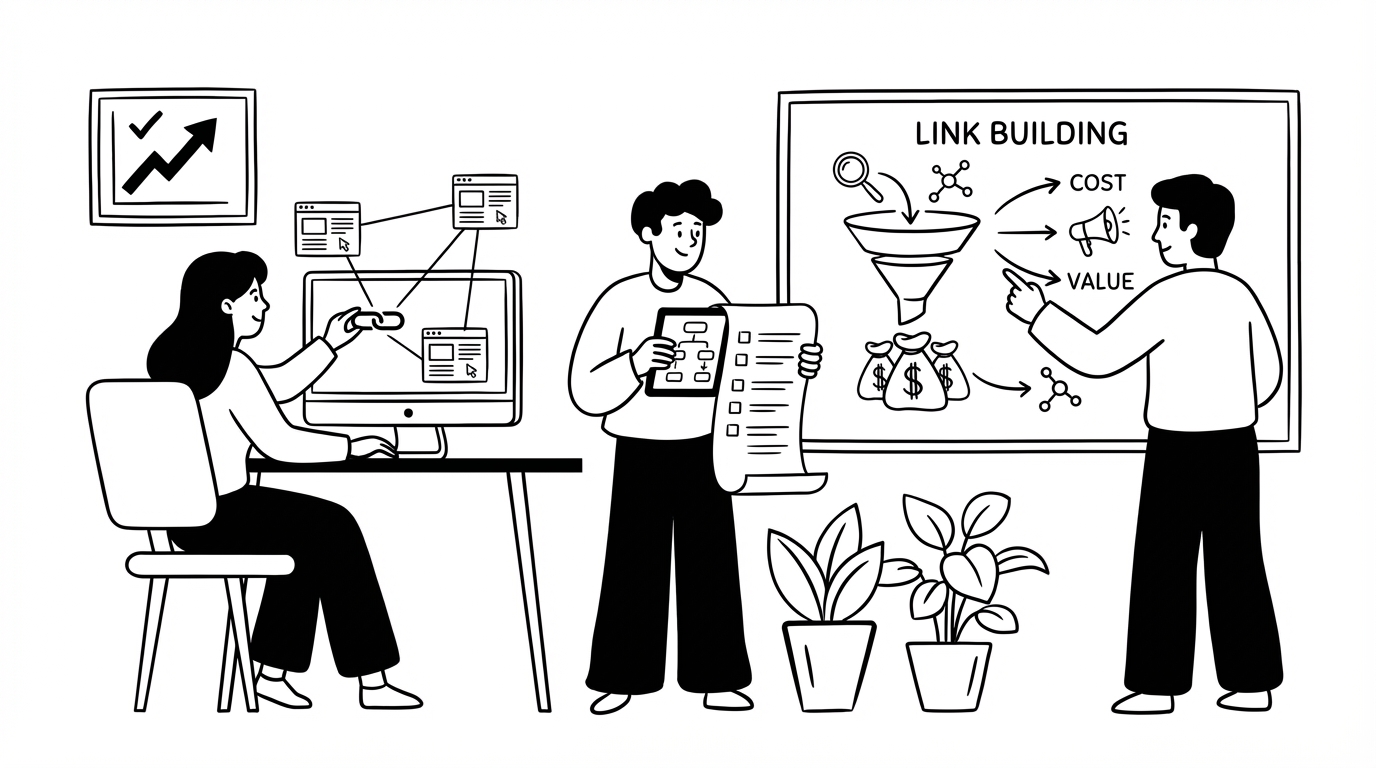
It’s easier to understand link building cost when you see how campaigns work in the real world. Below are practical examples, including what drives the budget and what results often look like over time.
These aren’t promises. They’re patterns you can use to plan.
Example 1: Local service business building local trust
Scenario: A plumbing company wants more calls from “emergency plumber” searches.
Approach:
What affects cost:
Likely payoff: Better map pack visibility and more branded searches. Local links can also support your Google Business Profile signals indirectly.
Example 2: B2B SaaS using data to earn editorial links
Scenario: A SaaS company wants to rank for competitive keywords in a crowded space.
Approach:
What affects cost:
Likely payoff: Fewer links, but stronger ones. Editorial links can lift multiple pages across the site.
Example 3: Ecommerce brand building links to category pages (the hard way)
Scenario: An ecommerce store wants category pages to rank, not just blog posts.
Approach:
What affects cost:
Likely payoff: Category pages can climb, but it often takes time. Internal linking becomes a key part of the plan.
Example 4: Professional services using thought leadership
Scenario: A law firm wants to grow organic search for practice areas.
Approach:
What affects cost:
Likely payoff: Strong brand authority and steady growth. Some links also drive referral leads.
Mini case study: “Resource page” campaign for a niche blog
Starting point: A niche blog has good content but few links.
Campaign:
Cost drivers: Prospecting time and personalization.
Typical results: A modest conversion rate, but the links are highly relevant. Rankings often improve for long-tail keywords first.
Cost breakdown by industry (why it changes)
Different sectors have different “online visibility costs.” Here’s why:
Long-term ROI: what to expect over time
Link building is rarely instant. A realistic timeline often looks like:
ROI comes from the combination of links, content, and website optimization. Links alone can’t fix a slow site or weak pages.
Freelancer vs agency: a practical comparison
This choice changes link building cost and your day-to-day workload.
Freelancer can be a fit when:
Agency can be a fit when:
Neither is “always better.” The real question is who can earn relevant links safely and consistently.
Beginner mistakes that inflate costs
New teams often spend more than they need because of avoidable errors:
Chasing high metrics instead of relevance
Building links to the wrong pages
Publishing content nobody wants to cite
Sending generic outreach
Ignoring internal linking
Expecting results in two weeks
Fixing these usually lowers spend and improves results.
Best Practices for Cost-Effective Link Building
Cost-effective doesn’t mean cheap. It means you get real results for what you spend. The goal is to reduce waste, not cut corners.
If you want to control link building cost, focus on repeatable systems and assets that keep earning links.
Start with keyword research and page selection
Before outreach, confirm the page you’re building links to can actually rank.
Check:
If the page is weak, links are like pouring water into a leaky bucket.
Build linkable assets that earn links naturally
A linkable asset is something people reference without being asked twice.
Good options:
One strong asset can reduce outreach volume, which lowers labor costs.
Use a tiered content approach
Instead of trying to earn links directly to every money page:
This is often safer and more realistic.
Tighten your prospecting criteria
Prospecting can become endless scrolling. Set rules.
A simple checklist:
Fewer, better prospects usually beats more, worse ones.
Personalize outreach, but don’t overdo it
Personalization matters, but you don’t need a novel.
Aim for:
If personalization takes 20 minutes per email, your costs will explode.
Improve conversion rate before increasing volume
If only 1 out of 200 emails gets a link, don’t send 2,000 emails. Fix the offer.
Test:
Small improvements here can cut your cost per earned link.
Combine link building with digital PR
Digital PR can earn fewer links, but stronger ones.
Ideas:
This can be more efficient than pure guest posting.
Don’t ignore internal linking
Internal links don’t replace backlinks, but they help you get more value from them.
Do this:
Better internal linking can reduce how many external links you need.
Track the right metrics
To manage SEO pricing and budgets, track more than “number of links.”
Useful metrics include:
A smaller number of relevant links can beat a larger number of random ones.
Build relationships, not one-off asks
Relationships lower costs over time.
If you treat every outreach email as a transaction, you start from zero each month. If you build real connections, future placements become easier.
Plan for maintenance
Links can break. Pages can be removed. Sites can change.
Set a monthly habit:
Maintenance protects your spend.
Future trends that may affect costs
Link building changes slowly, but a few trends are shaping budgets:
The takeaway: investing in real research, real expertise, and real relationships is likely to stay the safest path.
Common Misconceptions about Link Building
A lot of confusion around link building comes from oversimplified advice. Clearing up these myths can save you money and stress.
Many teams overspend on link building cost because they believe the wrong story about how links work.
Misconception 1: “Any link is a good link”
Not true. A link from an unrelated or spammy site can do nothing, or create risk.
Relevance and editorial context matter. If the link looks out of place, it probably is.
Misconception 2: “More links always means better rankings”
Quantity helps only when quality and relevance are there.
One strong mention from a trusted, on-topic site can beat ten weak links. Also, links help most when your page already matches search intent.
Misconception 3: “Paying for links is the same as paying for content”
Paying for content creation is normal. Paying for placements can cross lines depending on how it’s done.
Even when money changes hands, the real risk is patterns. If your link profile looks manufactured, you can lose ground.
Misconception 4: “Guest posting is dead”
Guest posting isn’t dead. Bad guest posting is.
If the article is useful, the site is real, and the link makes sense, it can still work. If it’s thin content on a site that exists only to sell posts, it’s a waste.
Misconception 5: “High domain authority guarantees a good link”
Domain authority is a third-party metric. It can be helpful, but it’s not a rule.
A smaller site with the right audience can be more valuable than a big site that’s barely related.
Misconception 6: “Link building is separate from website optimization”
Links can’t fix:
If your site isn’t solid, you’ll pay more for the same results.
Misconception 7: “You can predict exact results from a set number of links”
SEO isn’t a vending machine. You can estimate, but you can’t guarantee.
Rankings depend on competitors, content quality, intent match, and technical health. Links are one part of the mix.
Misconception 8: “Local businesses don’t need links”
Local SEO still benefits from links, especially local citations and community mentions.
If your competitors have strong local signals and you don’t, you may struggle to break into the map pack.
Misconception 9: “The cheapest option is the most cost-effective”
Cheap links that don’t help are expensive.
Cost-effective means:
Misconception 10: “You should avoid all paid promotion”
Paying to promote a piece of content is not the same as paying for a link.
For example, you might pay to sponsor an event, run ads to get your research seen, or hire a designer. Those costs can support earning links naturally.
When you understand these misconceptions, you can make smarter calls about budgets, vendors, and timelines.
Key Takeaways from Link Building Costs
Link building cost is really the cost of earning trust online. It includes strategy, content, outreach, and quality control. The price swings because industries, competition, and starting points are different.
If you want to spend wisely, focus on what compounds. Strong assets, good relationships, and clear targeting tend to lower your cost per result over time.
Here are the main takeaways to keep:
If you treat link acquisition like a long-term asset, the returns are usually more stable. If you treat it like a quick hack, costs rise and results get shaky.
When you’re planning your next quarter, ask one simple question: are you paying for links, or are you paying to become the source people reference?
Try Rankpeak for Efficient Link Building
If you’re trying to keep link building cost under control, having a clear workflow helps. Rankpeak can support your process by keeping research, outreach tasks, and progress tracking organized in one place. That makes it easier to spot what’s working, repeat it, and cut the busywork that inflates budgets. If you’re building links in-house or coordinating with partners, it’s worth trying Rankpeak to bring more structure to your link acquisition efforts.