Tiered Link Building Explained: A Practical Guide
What is Tiered Link Building
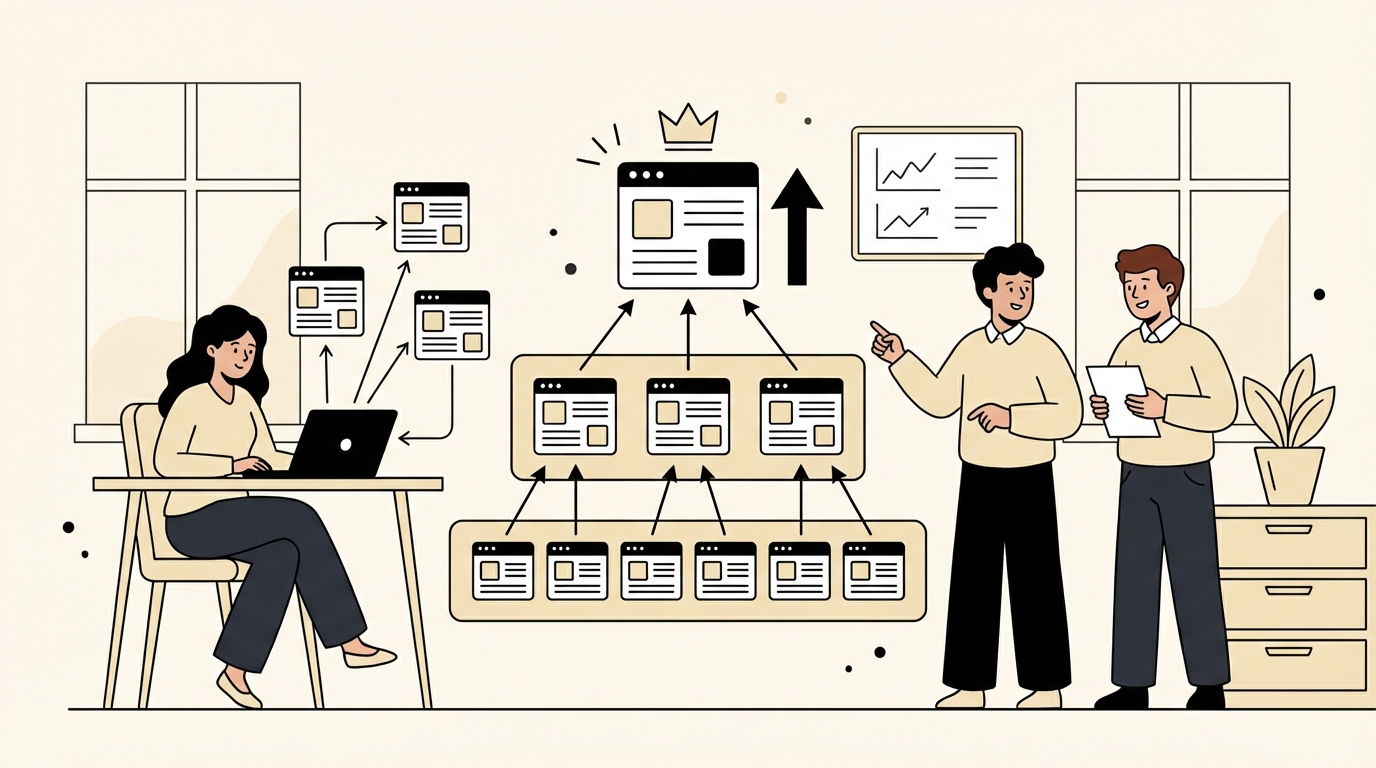
Tiered link building is a backlink strategy where you build links in layers, so some links point to your site, and other links point to those links. The goal is to pass authority through the chain while keeping your most important pages protected from low-quality signals.
Think of it like a link pyramid. At the top is your “money page” (a product page, service page, or a key guide). Tier 1 links point directly to that page. Tier 2 links point to the Tier 1 pages. Tier 3 links (optional) point to Tier 2.
The basic tiers (in plain terms)
1. Tier 1 (closest to your site)
These are the links you’d feel okay showing a client, a boss, or a Google reviewer. They come from real sites with editorial standards, like guest blogging placements, digital PR mentions, resource pages, or strong niche blogs.
2. Tier 2 (support layer)
These links don’t point to your site. They point to your Tier 1 URLs to help them get discovered, indexed, and seen as more credible. Tier 2 is where people often add more volume and more link diversity.
3. Tier 3 (optional amplification)
This layer supports Tier 2. It’s usually used for indexing and discovery, not for “power.” Many campaigns skip it because it can add SEO risks if done carelessly.
Why people use a tiered approach
A single backlink rarely lives in a vacuum. Pages that link to you also have their own authority, their own backlinks, and their own trust signals. Tiering tries to shape that environment.
Used carefully, tiering can be a white hat SEO tactic. Used carelessly, it can turn into a messy footprint that looks manufactured. The difference is quality control, relevance, and restraint.
The Importance of Tiered Link Building
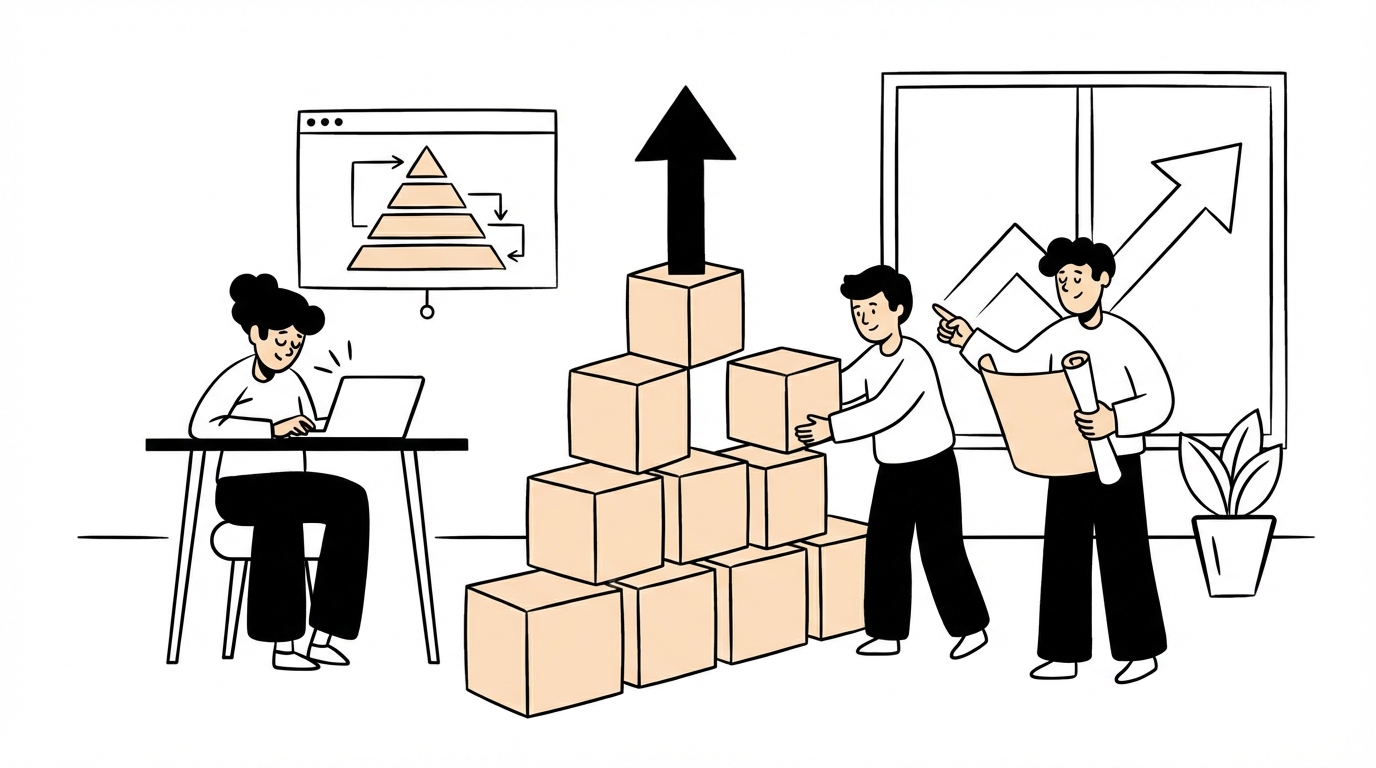
Tiered link building matters because it addresses a real problem in link acquisition: even good links can be weak if the page linking to you has no authority, no traffic, and no links of its own.
Instead of chasing endless Tier 1 links, a tiered setup tries to make each Tier 1 link more valuable. That can be useful when Tier 1 placements are expensive, slow to earn, or limited in your niche.
Key benefits
1. More value from each strong link
If you land a solid guest blogging link on a relevant site, supporting that article with a few quality Tier 2 links can help it rank, get crawled more often, and pass stronger signals.
2. Better link diversity without pointing everything at your site
You can add variety in sources, formats, and anchor text without sending a mixed bag directly to your domain.
3. Faster discovery and indexing
Some Tier 1 pages sit on sites that don’t get crawled often. A small set of supporting links can help search engines find and revisit those pages.
4. A more natural-looking ecosystem
In the real world, pages that matter tend to attract links. Tiering can mimic that pattern if you keep it relevant and earned-looking.
Real downsides (you should know these)
Tiered link building isn’t “free power.” It comes with tradeoffs.
1. More moving parts
You’re managing multiple URLs, anchors, and timelines. It’s easy to lose track.
2. Higher SEO risks if quality drops
If Tier 2 and Tier 3 turn into spam, you can create patterns that look manipulative. Even if those links don’t point to your site, they can still create problems if they’re clearly part of a scheme.
3. Harder to measure
You’re not just measuring “did I get a link?” You’re measuring whether the Tier 1 page improved, whether your target page improved, and whether organic traffic changed.
When it’s most important
Tiering tends to help most when:
If you’re in a low-competition niche, a clean, simple approach often wins. More complexity isn’t always better.
How Tiered Link Building Works
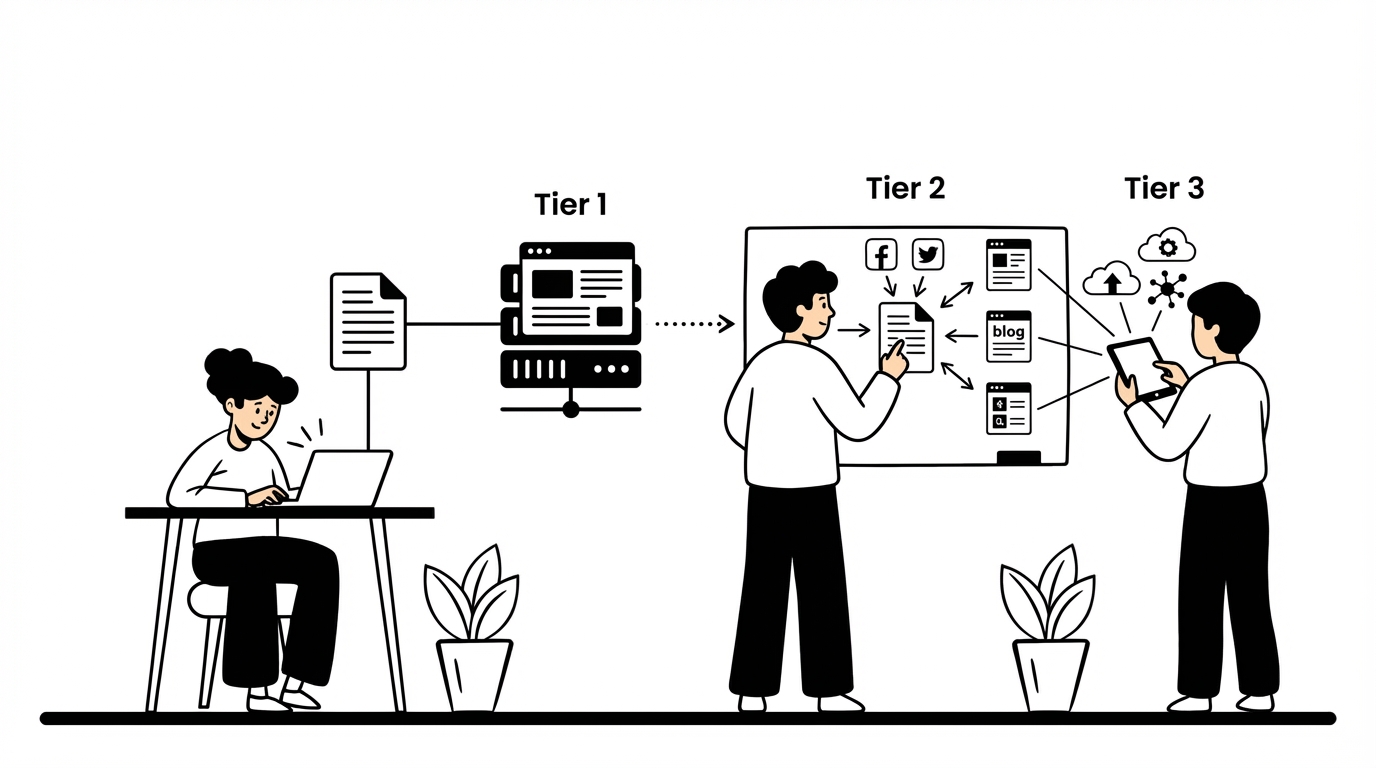
Tiered link building works by building authority and relevance around the pages that link to you, not just around your site. The process is part planning, part content, and part patience.
Here’s a practical way to think about it: you’re building a small neighborhood around your Tier 1 links so they look like real pages that earned attention.
Step-by-step process (DIY-friendly)
1. Pick the target page and set a goal
Choose one page you want to improve, like a service page or a guide. Define success in one sentence, such as “move from position 12 to top 5 for a specific query” or “increase organic traffic by 30% in 90 days.”
2. Build or earn a small set of Tier 1 links
Tier 1 should be relevant, editorial, and defensible. Common sources include:
3. Make sure Tier 1 pages are worth supporting
Before you build Tier 2 links, check the Tier 1 page:
4. Add Tier 2 links to strengthen Tier 1
Tier 2 links should still be decent. They don’t need to be as hard to earn as Tier 1, but they should be relevant and not obviously spam.
Good Tier 2 formats often include:
5. Use anchor text optimization carefully
Anchor text is a ranking factor, but it’s also a common way people get into trouble.
A safe pattern is:
6. Control pacing and keep it believable
Don’t drop 50 links in a day to a brand-new guest post. Spread links out. Let the page get crawled. Let it earn a little traction.
7. Track results and adjust
Watch the Tier 1 pages and your target page. If Tier 1 pages start ranking for related terms, that’s often a good sign.
A simple diagram you can picture
Those numbers aren’t rules. They’re a sanity check. If your Tier 2 is 500 links from junk sites, it’s not a strategy. It’s a liability.
Where domain authority fits in
People talk about domain authority as if it’s a Google metric. It isn’t. But it’s still a useful proxy for strength when you compare sites.
In tiering, you care about:
If Tier 2 pages aren’t indexed, they won’t help much. If Tier 1 pages never get crawled, your link equity flow slows down.
Examples and Use Cases of Tiered Link Building
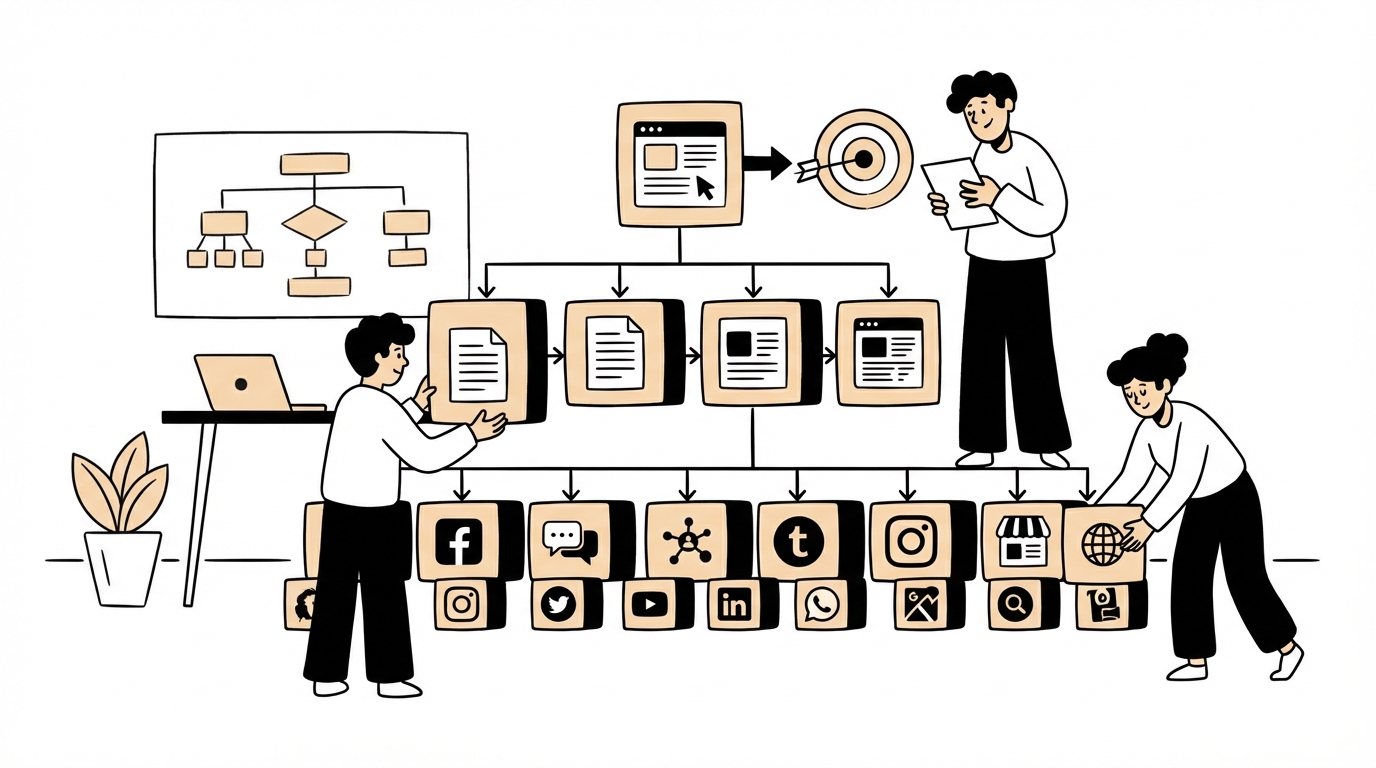
Tiered link building looks different depending on your industry, your budget, and how much risk you can tolerate. Below are practical scenarios, including mini case studies, so you can see how it plays out.
Example 1: Local service business (low to medium competition)
Scenario: A plumbing company wants more calls for “water heater repair” in one city.
Tier 1 approach:
Tier 2 support:
Why it works: Local SERPs often respond well to relevance and trust. Tier 2 here is light. The goal is to help the Tier 1 content get found and indexed, not to “blast” it.
What to measure:
Example 2: SaaS company (content-led growth)
Scenario: A SaaS brand publishes a guide targeting a competitive keyword. They can earn a few strong links, but not enough to break into the top 3.
Tier 1 approach:
Tier 2 support:
Outcome (typical pattern):
What to measure:
Example 3: E-commerce category page (harder than it sounds)
Scenario: An online store wants to rank a category page, but category pages are thin and don’t attract links easily.
Tier 1 approach:
Tier 2 support:
Why this is smart: You avoid forcing links to a page that doesn’t deserve them. You build a linkable asset and pass value through internal linking.
What to measure:
Example 4: Reputation repair after messy links (risk management use case)
Scenario: A site has a history of questionable link building tools and spammy backlinks. They want to rebuild safely.
Tier 1 approach:
Tier 2 support:
Why tiering can help here: You can keep your site’s direct link profile cleaner while still helping Tier 1 pages perform.
Mini case study: “B2B consulting lead gen” (real-world style walkthrough)
Starting point: A small consulting agency has a service page stuck around positions 8 to 15. They have decent content but few strong links.
Plan:
1. Publish a supporting guide that answers common buyer questions.
2. Earn 5 Tier 1 links to the guide through guest blogging and partner mentions.
3. Build 20 Tier 2 links to those guest posts over 6 weeks.
What happened (common outcome):
Key lesson: Tiered link building often works best when it supports content that can rank on its own, not when it tries to prop up weak pages.
Niche applications (often ignored)
If your niche is sensitive, treat tiering like seasoning. A little helps. Too much ruins the meal.
Best Practices for Tiered Link Building
Tiered link building can be safe and effective, but only if you treat it like a long-term SEO tactic, not a shortcut. These best practices keep your campaign grounded.
Start with pages that deserve links
If the target page is thin, fix that first. Add:
A tiered approach can’t rescue a page that doesn’t help users.
Keep Tier 1 clean and relevant
Tier 1 links should be:
Guest blogging is fine when it’s real publishing, not copy-paste articles across a network.
Treat Tier 2 as “support,” not “spam”
Good Tier 2 links often come from:
Avoid patterns like:
Use anchor text like a cautious adult
Anchor text optimization is where many campaigns go off the rails.
A practical mix:
If you wouldn’t say the anchor out loud in a normal sentence, don’t use it.
Build link diversity the right way
Link diversity isn’t about random sources. It’s about natural variety.
Mix:
But keep relevance as the filter. A relevant link from a small site often beats an irrelevant link from a big one.
Control velocity and footprints
A common footprint is a sudden burst of links to a brand-new Tier 1 guest post.
A safer pacing approach:
1. Publish Tier 1 content.
2. Wait for indexing.
3. Add a few Tier 2 links.
4. Watch crawling and rankings.
5. Add more only if it makes sense.
Make Tier 1 pages stronger with on-page tweaks
If you control the Tier 1 page (like a guest post you wrote), improve it:
A stronger Tier 1 page can rank and attract natural links, which is the cleanest “Tier 2” you can get.
Measuring success (the part most people skip)
You need to measure at three levels.
1. Tier 1 page performance
2. Target page performance
3. Business outcomes
A simple tracking sheet helps. Include:
Risk management checklist
1. Avoid anything you can’t explain
If a link source feels shady, it probably is.
2. Don’t build tiers on top of weak Tier 1
Supporting a low-quality Tier 1 page just amplifies the problem.
3. Keep records
If you ever need to audit or clean up, you’ll be glad you did.
4. Be extra careful in YMYL niches
Health and finance sites should keep tiering minimal and editorial.
Tiered link building works best when it’s boring. Boring means consistent, relevant, and hard to criticize.
Common Misconceptions About Tiered Link Building
Tiered link building has been around for a long time, and it picked up a lot of baggage. Some of what you hear is outdated. Some is just wrong.
Misconception 1: “It’s always black hat”
Tiering can be abused, but the structure itself isn’t the problem. A tiered approach can be white hat SEO when:
Misconception 2: “Tier 2 links don’t matter because they don’t point to my site”
They can matter because they affect the strength and visibility of the Tier 1 pages. If Tier 1 pages get crawled more, rank better, and earn trust signals, your link equity flow can improve.
That said, Tier 2 links aren’t magic. If they’re low quality or not indexed, they may do nothing.
Misconception 3: “More tiers means more rankings”
Adding Tier 3 and Tier 4 often adds more risk than reward. Each layer increases complexity and the chance of leaving a footprint.
Many solid campaigns stop at Tier 2.
Misconception 4: “Exact-match anchors are the fastest way to win”
Exact-match anchors can work, but they’re also a common trigger for unnatural patterns. A natural link profile has variety.
If you want to be aggressive, do it with content depth and relevance, not repetitive anchors.
Misconception 5: “Tiered link building replaces good content”
It doesn’t. If your page doesn’t satisfy search intent, links may lift it briefly, but it won’t hold. User signals and content quality still matter.
Misconception 6: “You can’t measure it”
You can measure it, but you need to track the right things:
If you only track the number of links built, you’ll miss the point.
Misconception 7: “Google can’t connect the dots”
Search engines are good at pattern detection. If your tiers are built with the same anchors, the same templates, and the same types of sites, it can look manufactured.
The safest approach is to keep everything relevant, varied, and paced like real publishing.
Misconception 8: “It’s only for big brands”
Small sites can use tiering too, often more effectively. Why? Because a few strong Tier 1 links can move the needle, and supporting them with a modest Tier 2 layer can be enough.
The key is restraint. Small businesses don’t need a giant link pyramid. They need a few strong signals and a clean backlink strategy.
Conclusion
Tiered link building is a structured way to support your strongest links so they can do more work for you. Done well, it improves discovery, strengthens Tier 1 pages, and adds link diversity without sending every signal straight to your domain.
The safest version is simple: earn a small set of high-quality Tier 1 links, then add a careful Tier 2 layer that’s relevant and indexable. Keep anchor text natural, pace your link acquisition, and measure results at the Tier 1 page, target page, and business level.
If you’re unsure, start small. One target page, a few Tier 1 links, and light support. That’s usually enough to learn what works in your niche without taking on unnecessary SEO risks.
Try Rankpeak for Deeper Insights
If you’re building a tiered link building plan, good tracking makes the difference between guessing and learning. Rankpeak can help you spot which pages are gaining traction, where your link signals are landing, and what’s actually moving rankings over time. Use it to keep a clean record of Tier 1 and Tier 2 URLs, watch performance changes, and catch issues early. If you want a clearer view of what’s working, it’s worth trying.