Best Free SEO Audit Tools in 2026: What Each One Checks and How to Run an Audit
 By Benjamin · Founder of rankpeak
An SEO audit sounds like something you buy. Most of it isn't. Google gives away the most important data for free, a desktop crawler will check 500 pages without a licence, and a handful of single-purpose checkers cover the rest. What costs money is scale and convenience, not the basics.
This guide lists the free audit tools worth your time, what each one actually checks, where its free version stops, and a seven-step audit that uses only free tools. Limits and prices come from each tool's own pages, checked on 6 November 2026. A few of the single-purpose checkers are ours, and we say so where they appear.
What a free SEO audit can and can't tell you
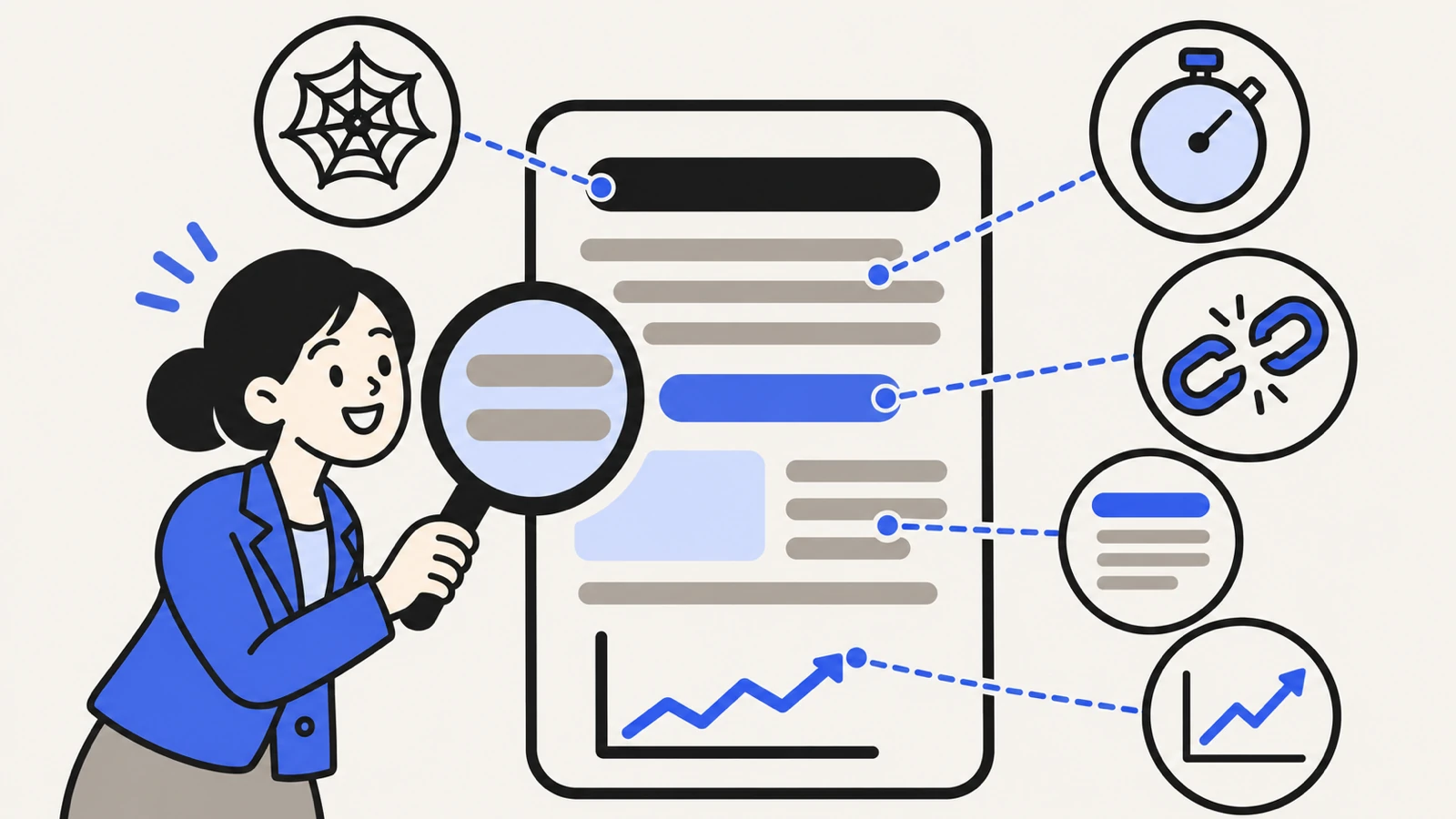
A useful audit answers a few concrete questions. Free tools cover all of them for a small or medium site:
What free tools won't do is decide what to fix first for your business, or audit a site with hundreds of thousands of pages in one go. That's where judgement, or a paid crawler, comes in.
Free SEO audit tools compared
Sources, checked on 6 November 2026: Google Search Console help, PageSpeed Insights documentation, Screaming Frog pricing, Ahrefs' free plan, Rich Results Test and Bing Webmaster Tools.
Google's own tools come first
Google Search Console is the one tool no audit should skip, because it shows what Google itself sees. Google describes it as a free service: once you verify your site, you get the queries, impressions, clicks and average positions you already have, the indexing status of your pages with the reason any page is excluded, URL Inspection for a single page, sitemap submission, Core Web Vitals and rich result reports, and email alerts when something breaks.
PageSpeed Insights answers the speed question with two kinds of data. Real-user field data comes from the Chrome User Experience Report, and a lab test comes from Lighthouse. Google's thresholds for a good experience are a Largest Contentful Paint of 2.5 seconds or less, an Interaction to Next Paint of 200 milliseconds or less, and a Cumulative Layout Shift of 0.1 or less. When field data exists, trust it over the lab score: it is what your visitors actually experienced.
Lighthouse, built into Chrome's developer tools, runs the same lab test locally on any page, including pages behind a login or on a staging site that PageSpeed Insights can't reach.
Crawlers for the technical audit
A crawler visits your pages the way a search engine does and lists everything wrong in one place: broken links, redirect chains, missing or duplicate titles, conflicting canonicals, pages blocked by robots directives.
Screaming Frog SEO Spider is the long-standing desktop crawler. Its free version crawls up to 500 URLs, and its pricing page shows the same features in the free and paid versions; the paid licence, €245 a year on the page we saw, mainly removes the crawl limit. For a site under 500 pages, the free version is a complete technical audit.
Ahrefs Free, previously called Ahrefs Webmaster Tools, runs a cloud Site Audit that checks for more than 170 technical and on-page issues and tracks a health score over time. It gives 5,000 crawl credits per verified project per month, and also shows the sites linking to you and the keywords you rank for. You have to verify that you own each site.
Free checkers for single issues
Some problems need a focused check rather than a full crawl. Google's Rich Results Test tells you whether a page's structured data is eligible for rich results such as FAQs or product details. For quick checks without an account, our free tools cover a few common jobs: the broken link checker for one page's links, the robots.txt generator and validator, the sitemap URL extractor to list what your sitemap actually contains, and the readability analyzer for dense copy. They have daily limits and don't replace a crawler.
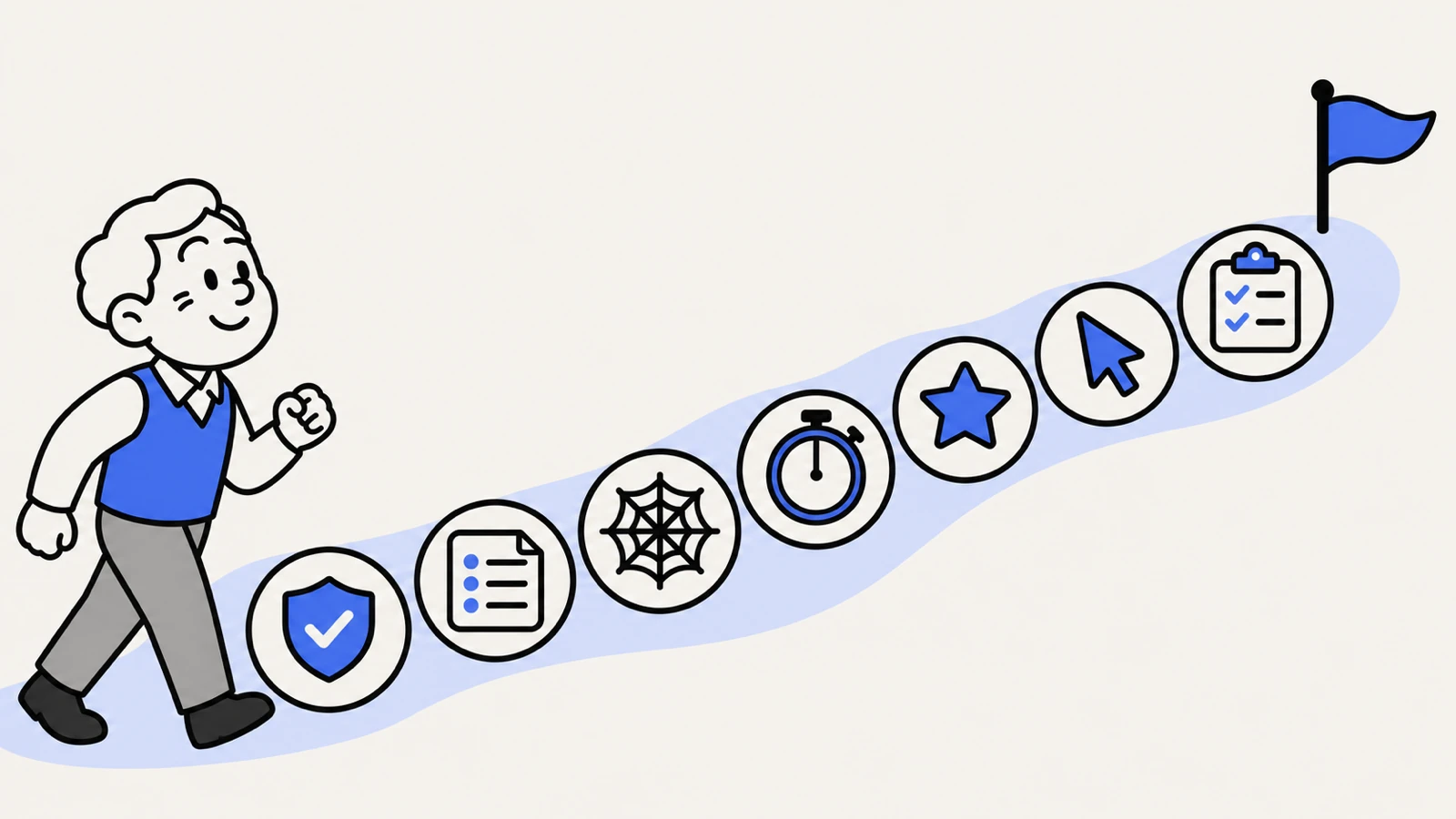
Steps to run a free SEO audit
When a paid tool is worth it
Pay when the free limit is the thing slowing you down: a site well beyond 500 pages that you need to crawl in full, several sites to monitor, scheduled crawls with alerts, or competitor data you can't get from your own Search Console. Until then, the free stack above finds the same problems; it just takes a little more manual work.
Where rankpeak fits
rankpeak doesn't replace an audit tool. It finds keywords your site can win, writes and publishes articles in your tone, and adds internal links, which is the part of SEO an audit can't do for you: creating the pages worth ranking. The free tools mentioned above are part of the site, and plans are on the pricing page.
Frequently asked questions
Is Google Search Console enough for an SEO audit?
It is the most important part, because it shows indexing and search data straight from Google, but it doesn't crawl your site the way a dedicated crawler does. Pair it with Screaming Frog's free version or Ahrefs' free Site Audit to catch broken links, redirect chains and duplicate titles.
What is the best free SEO audit tool?
For a small site, the combination of Google Search Console, PageSpeed Insights and Screaming Frog's free version covers nearly everything. If you prefer a cloud tool with a health score, Ahrefs' free plan is a good alternative to the crawler.
How often should I run an SEO audit?
A full audit every quarter and after any redesign or migration is a sensible rhythm, with a quick monthly look at Search Console's indexing and Core Web Vitals reports in between.
Can free tools audit a large website?
Partly. Search Console and PageSpeed Insights work at any size, but Screaming Frog's free version stops at 500 URLs and Ahrefs' free plan at 5,000 crawl credits per project each month. Beyond that, crawl a representative sample of each template, or pay for a licence.
About the author
Benjamin is the founder of rankpeak. He builds software for small teams that want organic growth without an agency, and reviews every rankpeak guide before it goes live.
All his guidesFollow @benjaminatsf on XHow we write and test