11 White Hat SEO Link Building Tactics That Work
Rankpeak
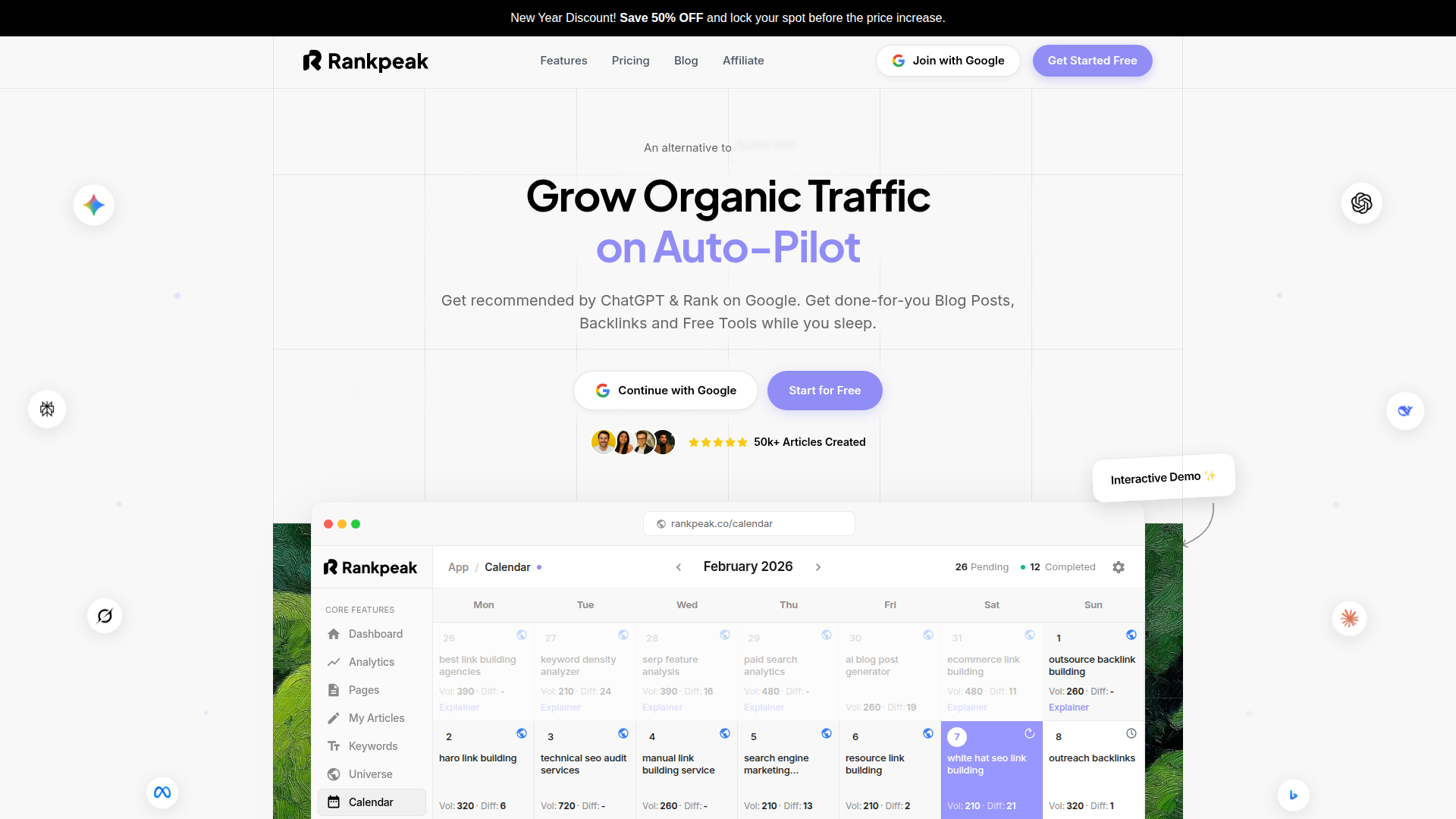
White hat seo link building works best when you can keep your outreach, content, and follow-ups organized. Rankpeak is built for small business owners, entrepreneurs, and lean marketing teams who need a clear system, not a messy spreadsheet.
What makes Rankpeak stand out is how it ties together the whole workflow: finding realistic link opportunities, planning content that earns links, and tracking what actually moved your rankings and traffic. It’s also practical for local businesses that need community links (chambers of commerce, local news, sponsorships) and for e-commerce sites that need links to category pages and guides, not just blog posts.
Rankpeak is most useful when you’re doing consistent link earning over months. You can document targets, record conversations, and see which outreach strategies lead to real placements. If you want a structured way to run ethical SEO without cutting corners, add Rankpeak to your stack and set up your first campaign this week so you have clean data to learn from.
Key Features of Rankpeak
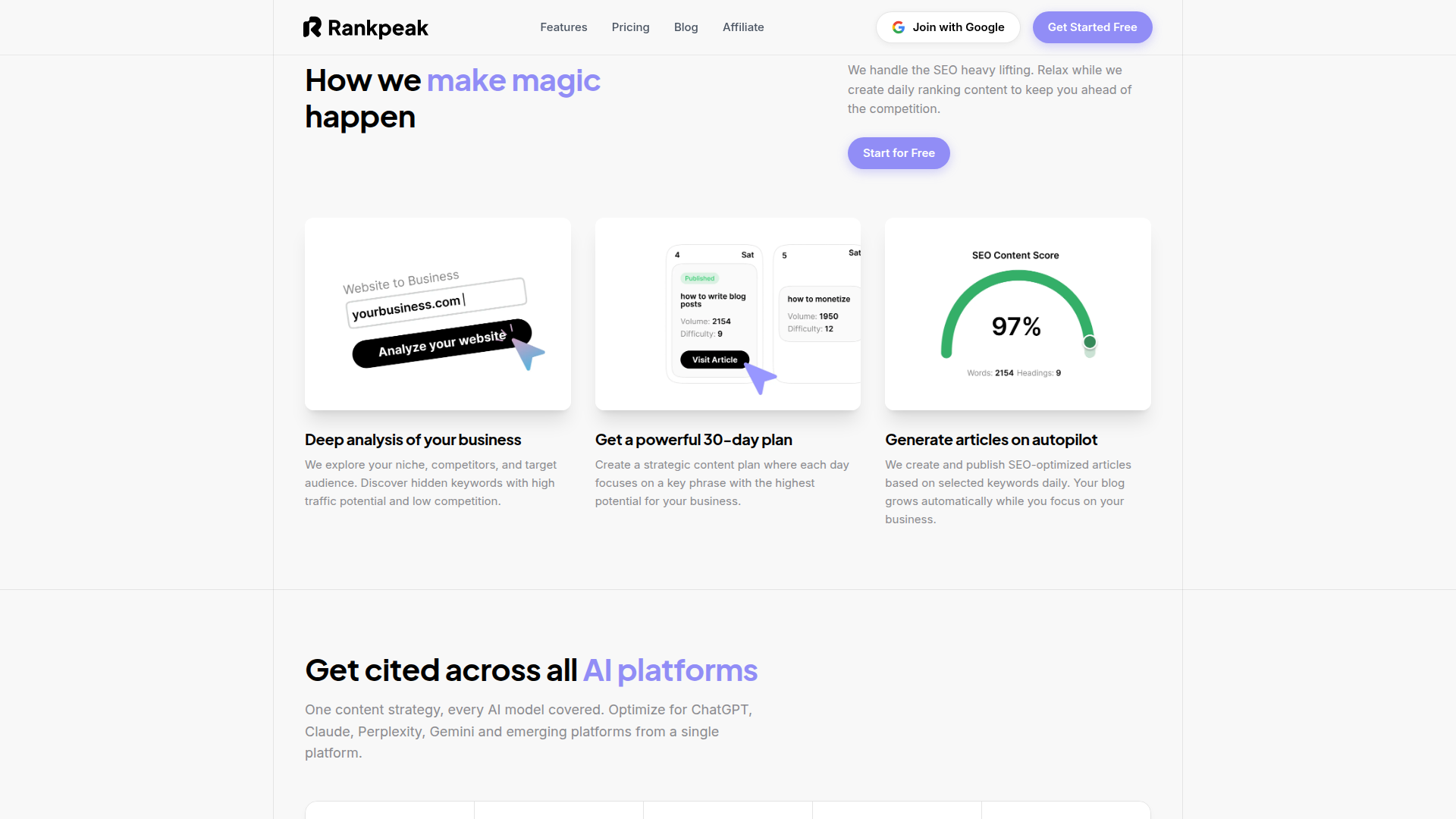
Rankpeak focuses on the parts of link earning that usually break down for small teams: process, consistency, and measurement.
You get campaign-style organization for outreach strategies, so each prospect has a status, notes, and next steps. That sounds basic, but it’s the difference between “we emailed some sites” and a repeatable system.
Rankpeak also supports content marketing planning for linkable assets. You can map an asset to a set of target sites, track who you pitched, and log what angle you used. That helps you learn what editors respond to.
On the reporting side, Rankpeak is geared toward SEO metrics that matter: new referring domains, link diversification, and traffic generation tied to the pages you promoted. For local SEO, it’s handy to tag opportunities by city or region, so you don’t mix national outreach with local citations and community links.
Rankpeak Pricing
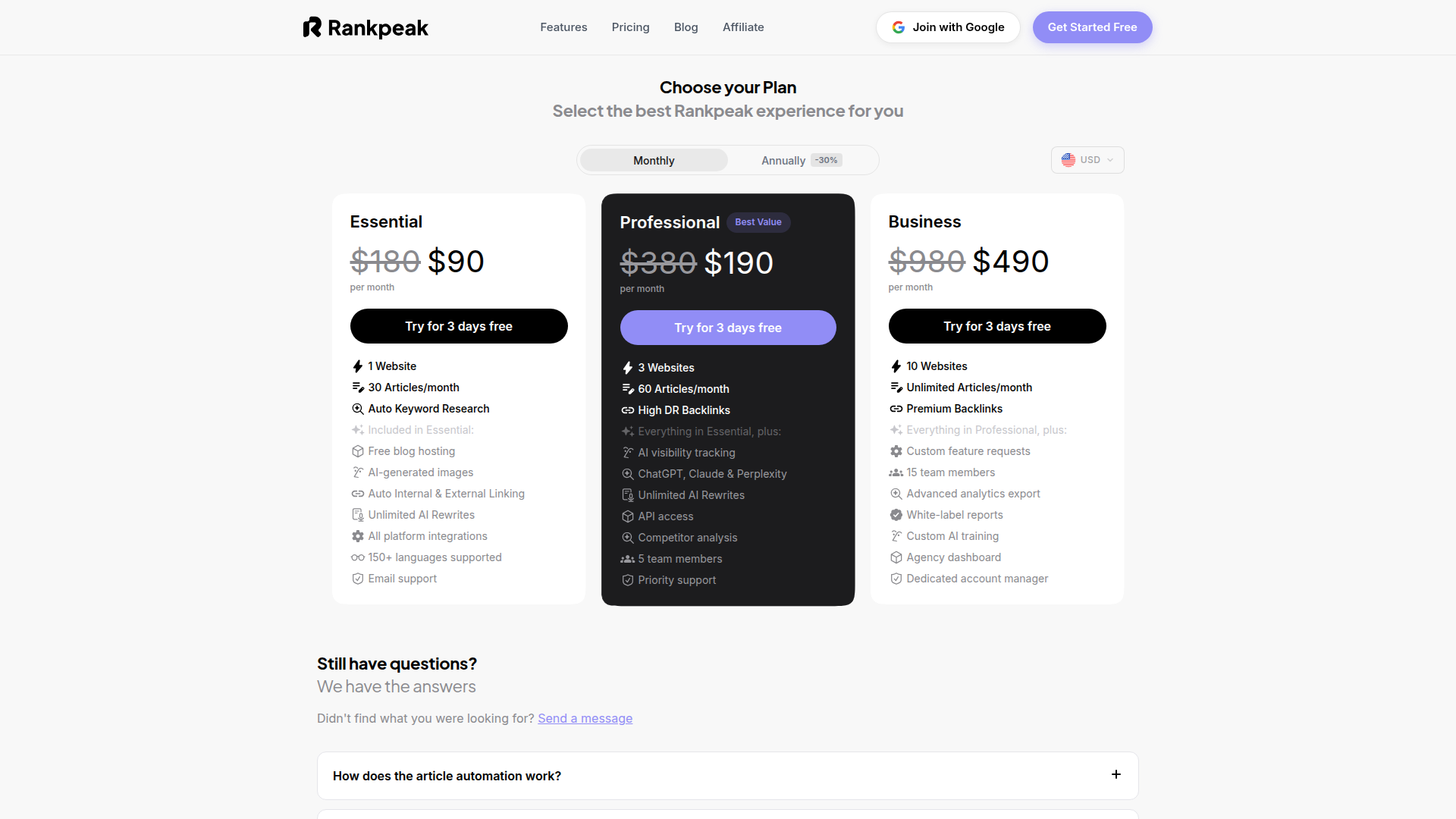
Rankpeak pricing typically fits the “small team” reality: you want enough capability to run outreach and track results, without paying for a huge agency suite.
Expect pricing to be tiered based on seats, campaign volume, and reporting depth. A starter tier usually covers a single brand with core tracking and outreach management. Mid tiers tend to add more campaigns, collaboration features for marketing teams, and richer reporting for backlink profile health.
If you’re comparing value, look at what you’d otherwise pay for separate tools: a prospect tracker, a follow-up system, and a reporting dashboard. Rankpeak can replace parts of that stack.
Before you commit, list your monthly outreach volume and how many sites you manage. That makes it easier to pick a tier that matches your pace, not an aspirational one.
Pros and Cons of Rankpeak
HARO

HARO (Help a Reporter Out) is a classic way to earn editorial links. Journalists post requests, and sources reply with quotes, data, or quick expertise. When you’re selected, you can land links from high-authority publications, which can lift site authority and brand visibility.
The catch is speed and relevance. Most queries get flooded. You need to reply fast, answer the exact question, and sound like a real human. Short, clear quotes win more than long essays.
For local SEO, look for queries about regional trends, small business stories, or local events. A local contractor, dentist, or restaurant owner can be a strong source when the story needs real-world detail.
How to measure success: track replies sent, placements earned, referring domains, and the pages linked. Also watch assisted conversions, since PR links often drive trust more than direct sales.
Risks: don’t fake credentials. Editors can spot it, and it can hurt your online reputation management.
Google Search Console
Google Search Console isn’t a link building tool, but it’s one of the best ways to decide what to build links to. It shows which pages already get impressions, which queries you’re close to ranking for, and where a small boost could move you up.
Use the Performance report to find pages sitting in positions 8 to 20. Those are often “link-ready.” A few strong links can improve search engine ranking faster than starting from scratch.
Search Console also helps you spot link earning opportunities. If a guide is getting impressions but low clicks, rewrite the title and intro, then promote it again. Better engagement can make outreach easier because the page looks more useful.
For e-commerce, focus on category pages and buying guides. Many stores only build links to blog posts, then wonder why product categories don’t rank.
Measurement framework:
If you’re using Rankpeak, pair its link tracking with Search Console performance to connect effort to outcomes.
BuzzStream
BuzzStream is built for outreach at scale. It helps you find contact info, manage conversations, and keep a clean history of who you emailed and what happened. For agencies and busy marketing teams, that’s the difference between organized outreach strategies and chaos.
Where it shines is relationship management. If you do recurring campaigns, like annual reports or seasonal guides, you can build a list of editors and site owners who already know you. That usually improves response rates over time.
BuzzStream also supports link diversification. You can segment prospects by niche, domain authority range, or content type. That helps you avoid building a backlink profile that looks unnatural.
Local SEO tip: create a segment for local publications, community blogs, and event calendars. Those links may not look “big,” but they can drive real traffic generation and local trust.
Watch-outs: outreach tools can tempt people into blasting templates. Don’t. Personalization is still the main driver of replies, especially for ethical SEO.
Terkel

Terkel connects brands with expert prompts, similar to journalist query platforms. You answer questions, share experience, and sometimes get quoted with a link. It’s a practical way to earn links without pitching cold emails all day.
The best results come from being specific. Instead of generic advice, share a quick story, a number you tracked, or a mistake you fixed. Editors want something they can paste into a piece with minimal editing.
Industry examples:
To measure success, track acceptance rate and link quality. A smaller number of relevant links can beat a pile of random mentions.
One more angle: use Terkel responses to fuel content promotion. If you gave a strong quote about “winter HVAC prep,” turn that into a short checklist post on your site, then pitch local news and neighborhood groups.
Connectively
Connectively (formerly HARO) follows the same core idea: journalists need sources, and experts want exposure. If you’re consistent, it can become a steady channel for digital PR style links.
Treat it like a routine. Set a daily time block, filter for your niche, and only answer queries where you can add something real. A fast, useful reply beats a long one.
For local businesses, look for travel, lifestyle, and “best of” stories that need local quotes. For e-commerce, focus on product roundups and seasonal shopping pieces. Those can send referral traffic that converts.
Risk management matters here. Don’t overpromise results or claim credentials you can’t back up. Also avoid stuffing anchor text requests into your reply. Let the editor choose.
If you’re tracking outcomes in Rankpeak, tag these placements as “PR/editorial” so you can compare them against guest posts and broken link wins. Editorial links often have higher trust signals, even if you can’t control the target URL.
Infographics
Infographics can still earn links, but only when they’re genuinely useful. Most generic designs don’t get picked up anymore. The winning formula is simple: original data, a clear takeaway, and an embed-friendly format.
Good infographic topics:
Promotion is the real work. Build a list of writers who cover the topic, then pitch the graphic as a supporting visual for an existing article. That’s easier than asking them to write a new post.
Mobile SEO matters here. If the graphic is unreadable on a phone, people bounce. Use a vertical layout, large text, and a short summary above the image.
Measure success with:
Infographics are link earning plus content marketing, not a shortcut.
Guest Posts
Guest posts are still a valid ethical SEO tactic when the goal is audience fit, not anchor text control. Think of them as partnership content. You bring a strong idea, the host site gets a useful article, and you earn a relevant link.
A simple quality checklist:
Local SEO angle: write for local publications, neighborhood blogs, local universities, and community organizations. A “moving checklist” guest post on a city blog can drive leads, not just SEO.
E-commerce angle: pitch buying guides, comparison posts, and care instructions. Link to a non-sales resource first, then let internal links guide readers to products.
Risks and penalties: avoid networks that sell placements at scale. Those patterns are easy to spot and can lead to manual actions. If it feels like a link farm, it probably is.
Track results by referral traffic, keyword movement for the linked page, and new branded searches.
Linkable Assets
Linkable assets are pages people want to cite. They’re the backbone of sustainable link earning because they give other sites a reason to link without you begging.
Common formats that work:
For local businesses, a “cost guide by neighborhood” or “permit checklist” can attract links from realtors, city blogs, and local news. For e-commerce, size guides, compatibility charts, and “how to choose” pages can earn links from reviewers and forums.
Don’t skip content promotion. Even great assets need a push. Build a list of pages that already link to similar resources, then show them what’s better or newer about yours.
Measurement framework:
Rankpeak can help here by tying each asset to a prospect list and tracking which outreach strategies produced real links.
Digital PR
Digital PR is link building through newsworthy stories. Instead of asking for a link, you give writers something to cover: data, a trend, a strong opinion, or a timely local angle. When it works, you earn authoritative backlinks and a reputation boost at the same time.
Ideas that don’t require a huge budget:
Industry mini case studies:
Social media helps here. Post the key chart, then tag relevant reporters and communities. You’re not trying to go viral. You’re trying to get the right person to notice.
Risk management: don’t inflate numbers or hide methodology. If a journalist can’t trust the data, you lose the link and the relationship.
Track success with pickups, referring domains, brand mentions, and changes in branded search volume.
Broken Link Building
Broken link building is simple: find a page that links to a dead resource, then offer a working replacement. It’s one of the most “win-win” outreach strategies because you’re helping the site fix a problem.
How to do it without wasting time:
Local SEO twist: local organizations often have outdated resource pages. City event sites, schools, and nonprofits can have lots of broken links.
E-commerce twist: create evergreen resources like care guides, compatibility charts, or safety standards pages. Those are easier to cite than product pages.
Avoid spam signals. Don’t send a generic template to 500 sites. Personalize the note and keep it short.
Measure success by reply rate, links earned, and the authority and relevance of the linking pages. Also audit your own site for broken links, because nothing kills link earning like a resource that 404s.
Final Verdict

White hat seo link building is less about tricks and more about repeatable habits: publish something worth citing, build real relationships, and track what moves the needle.
If you want fast authority signals, journalist platforms like HARO and Connectively can land editorial mentions. If you need a steady pipeline, guest posts, broken link building, and outreach to promote linkable assets are more predictable. Digital PR can be the multiplier when you have data or a story.
Don’t ignore measurement. Watch referring domains, link quality, traffic to the linked page, and ranking changes for the target query set. Use Google Search Console to pick the right pages, then compare results over weeks, not days.
For teams that need a clear workflow, Rankpeak fits well alongside these tactics. It helps you stay consistent, which is what ethical SEO usually comes down to.